
 admin
admin Tiny House Floor Plan: A Smart, Affordable Home Design That Maximizes Every Square Foot
Tiny House Floor Plan: A Smart, Affordable Home Design That Maximizes Every Square Foot
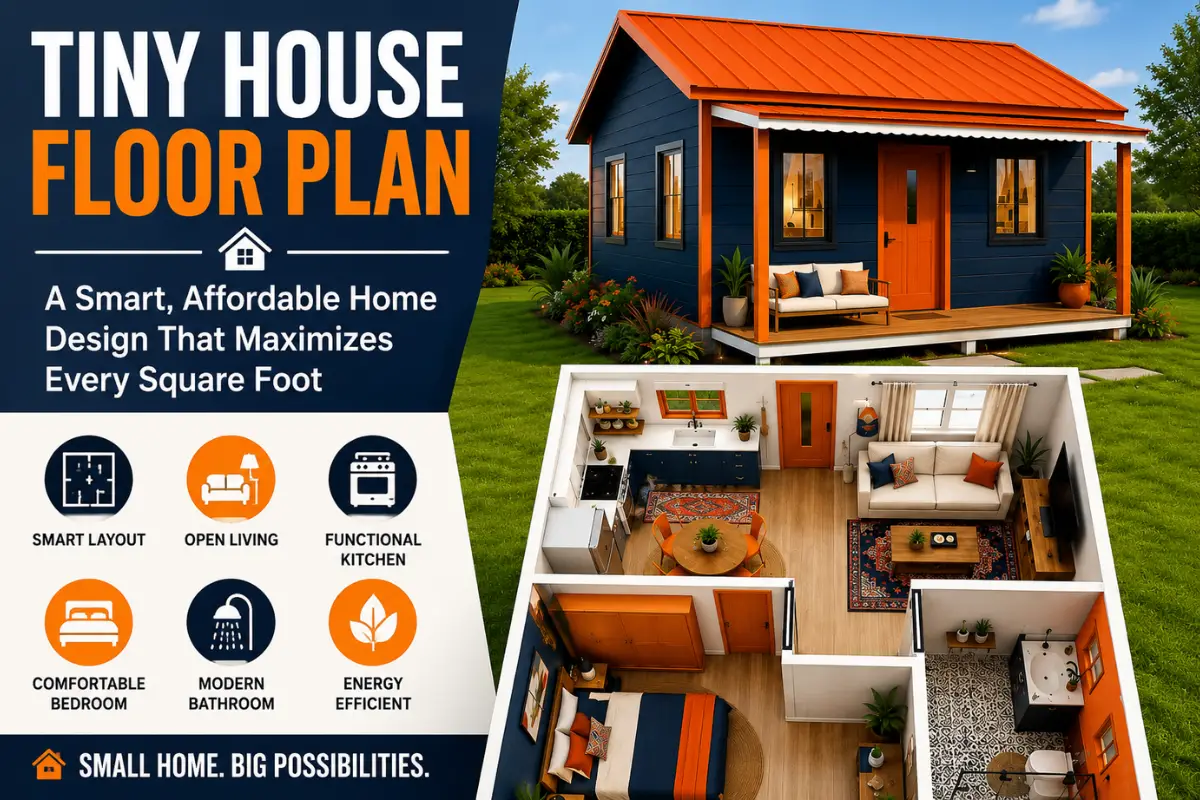
The dream of owning a beautiful, functional, and affordable home is becoming increasingly achievable thanks to the growing popularity of the tiny house movement. This stunning tiny house floor plan demonstrates how thoughtful design can transform a compact footprint into a comfortable, stylish, and highly practical living space.
Featuring a bold exterior color palette, a welcoming front porch, an open-concept living area, a full kitchen, a spacious bedroom, and a modern bathroom, this home proves that downsizing does not mean sacrificing comfort. Instead, it highlights how strategic planning and intelligent space utilization can create a home that feels larger than its actual size.
Whether you’re searching for a primary residence, vacation retreat, rental investment, guest house, or retirement home, this tiny house floor plan offers valuable inspiration for anyone interested in efficient living.
Why Tiny Homes Continue to Gain Popularity
In recent years, more people have started looking for alternatives to traditional large homes. Rising housing costs, increasing utility bills, and a desire for a simpler lifestyle have made tiny homes an attractive option.
A well-designed tiny house floor plan offers numerous advantages:
- Lower construction costs
- Reduced maintenance requirements
- Improved energy efficiency
- Smaller environmental footprint
- Greater financial freedom
- Faster construction timelines
- Flexible placement options
- Simplified living environments
Instead of dedicating resources to unused rooms and oversized spaces, homeowners can focus on creating a home that serves their actual needs.
This featured design perfectly demonstrates how a compact home can provide everything necessary for comfortable daily living.
Exterior Design That Makes a Bold Statement
The first thing that captures attention is the home’s striking exterior.
The combination of deep navy blue siding and vibrant orange trim creates a modern and energetic appearance. This bold color contrast gives the house strong curb appeal while maintaining a warm and welcoming atmosphere.
The metal roof adds durability and weather resistance while complementing the contemporary aesthetic. Metal roofing is particularly popular in tiny home construction because it offers:
- Long lifespan
- Minimal maintenance
- Energy efficiency
- Excellent water drainage
- Fire resistance
- Modern visual appeal
The covered front porch further enhances the home’s functionality and charm.
Rather than simply serving as an entrance, the porch acts as an extension of the living area. It provides space for relaxation, outdoor seating, and social interaction while protecting occupants from sun and rain.
Even in a small home, outdoor living space significantly improves overall comfort.
A Well-Planned Tiny House Floor Plan
One of the most impressive aspects of this tiny house floor plan is the efficient layout.
Every room has been carefully positioned to maximize usability while maintaining an open and uncluttered feel.
The home includes:
- Open-concept living room
- Functional kitchen
- Dining area
- Private bedroom
- Full bathroom
- Storage solutions
- Front porch
Instead of dividing the home into numerous small rooms, the design embraces openness. This strategy helps the interior feel larger, brighter, and more inviting.
The floor plan creates clear zones for living, cooking, dining, sleeping, and personal care without wasting valuable square footage.
Open-Concept Living Room
The living room serves as the heart of the home.
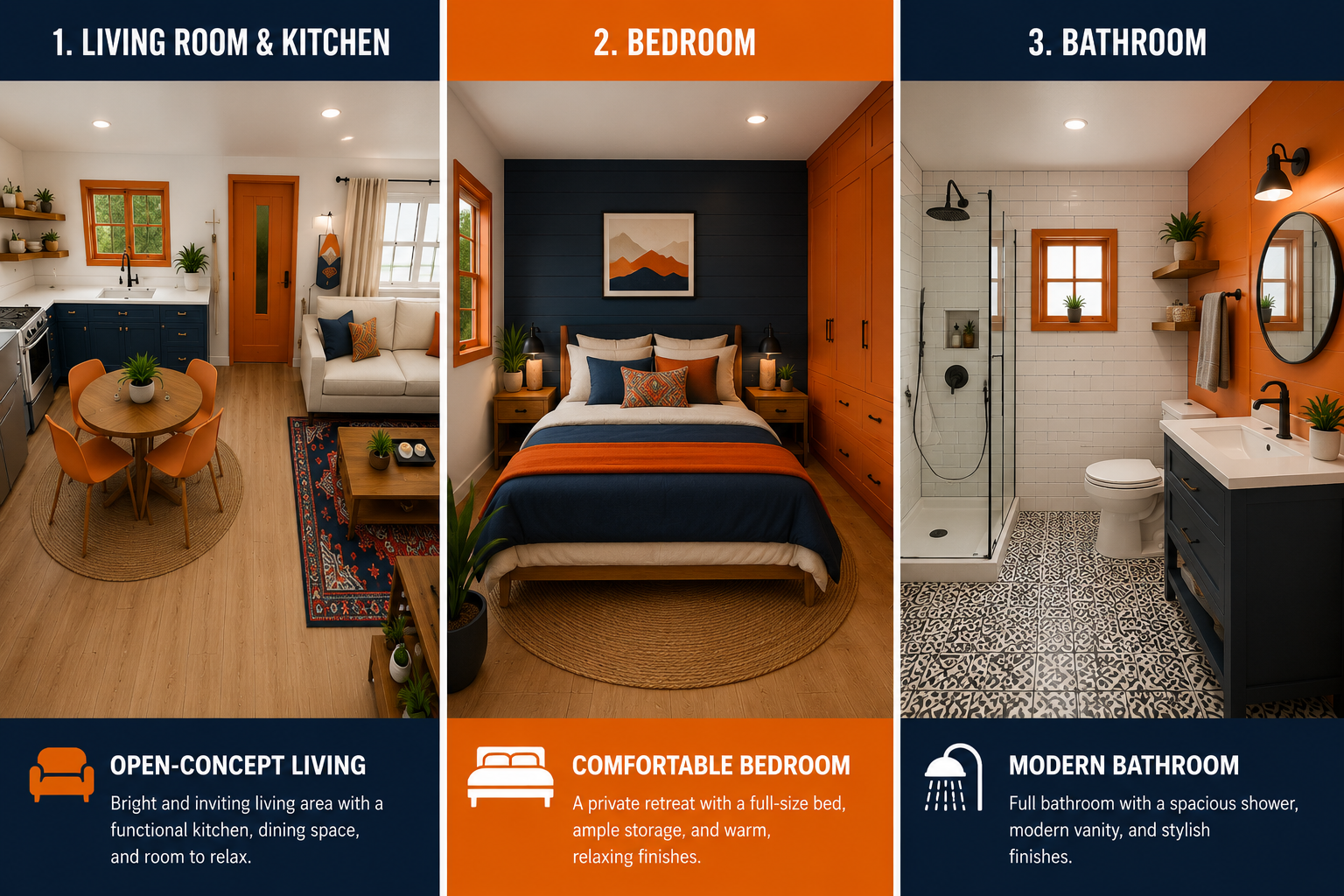
Positioned near the front entrance, it provides a comfortable space for relaxation and entertainment. The large windows allow natural light to flow throughout the room, creating a bright and airy environment.
Several design features help maximize comfort:
Natural Light
Large windows reduce the need for artificial lighting during the day and make the room appear larger.
Comfortable Furniture
The seating arrangement creates a cozy gathering area without overwhelming the available space.
Visual Connection
The living room remains connected to the kitchen and dining area, enhancing the sense of openness.
Efficient Layout
Furniture placement allows for smooth movement throughout the home.
These elements work together to create a living area that feels welcoming and spacious despite the home’s compact footprint.
Functional Kitchen Design
A successful tiny house floor plan depends heavily on kitchen efficiency.
This kitchen demonstrates how smart planning can deliver full functionality within a limited area.
Key features include:
Ample Cabinet Storage
The dark blue cabinetry provides substantial storage while maintaining a clean appearance.
Efficient Work Triangle
The sink, stove, and refrigerator are positioned for convenient meal preparation.
Open Shelving
Decorative shelving adds storage and visual interest without making the space feel cramped.
Natural Lighting
The window above the sink brings sunlight into the workspace and improves the overall atmosphere.
Compact Appliances
Appropriately sized appliances maximize functionality while conserving space.
This kitchen proves that homeowners do not need a massive cooking area to prepare enjoyable meals and maintain an organized home.
Dining Area That Fits Perfectly
Adjacent to the kitchen is a small dining space featuring a round table.
Round tables are particularly effective in compact homes because they:
- Improve traffic flow
- Reduce sharp corners
- Encourage conversation
- Occupy less visual space
- Create a softer appearance
The dining area comfortably accommodates daily meals while serving as a multipurpose space for work, hobbies, or social gatherings.
Its location between the kitchen and living room creates a natural transition between functional zones.
Comfortable Bedroom Retreat
Privacy remains important in any home, regardless of size.
This tiny house floor plan includes a dedicated bedroom that offers comfort and relaxation.
The bedroom features:
Full-Size Bed
The sleeping area comfortably accommodates two occupants.
Built-In Storage
Large wardrobe storage helps reduce clutter and improve organization.
Warm Color Palette
The combination of navy and orange accents creates a cozy and sophisticated atmosphere.
Natural Lighting
Windows provide daylight while helping the room feel larger.
Efficient Layout
Furniture placement maximizes usable floor space.
By maintaining a separate bedroom, the design supports better sleep quality and a stronger sense of privacy.
Modern Bathroom Design
The bathroom showcases how thoughtful planning can maximize functionality within a compact footprint.
Features include:
- Full shower
- Modern vanity
- Toilet
- Storage space
- Stylish flooring
- Natural light
The patterned floor tile introduces visual interest while helping define the room’s identity.
Using durable and moisture-resistant materials ensures long-term performance while maintaining aesthetic appeal.
Despite its modest size, the bathroom delivers everything necessary for daily comfort and convenience.
Storage Solutions in Small Homes
One of the biggest challenges in compact living is maintaining organization.
A successful tiny house floor plan must include sufficient storage without sacrificing comfort.
This design incorporates storage in several ways:
Bedroom Wardrobe
A large wardrobe provides clothing storage.
Kitchen Cabinets
Extensive cabinetry keeps cookware and supplies organized.
Open Shelving
Decorative storage maintains accessibility.
Multi-Purpose Furniture
Many tiny homes benefit from furniture that serves multiple functions.
Vertical Space
Wall-mounted storage maximizes available square footage.
By prioritizing organization, homeowners can enjoy a clean and clutter-free environment.
Energy Efficiency Benefits
Tiny homes naturally consume fewer resources than larger houses.
This tiny house floor plan supports energy efficiency through several design elements:
Smaller Interior Volume
Less space requires less heating and cooling.
Abundant Natural Light
Large windows reduce daytime electricity usage.
Efficient Layout
Open spaces improve air circulation.
Modern Construction Materials
High-quality insulation can significantly reduce energy consumption.
Compact Systems
Smaller homes typically require smaller HVAC systems and water heaters.
These factors contribute to lower utility bills and reduced environmental impact.
Affordability and Financial Freedom
One of the strongest reasons people choose tiny homes is affordability.
Compared to traditional housing, a tiny house floor plan can offer substantial savings in multiple areas.
Lower Construction Costs
Smaller structures require fewer materials and less labor.
Reduced Utility Expenses
Heating, cooling, and lighting costs are significantly lower.
Lower Maintenance Costs
Smaller homes require less upkeep.
Property Flexibility
Many homeowners place tiny homes on existing land, reducing overall housing expenses.
Faster Payoff
Lower mortgage amounts can accelerate financial independence.
For many families and individuals, these benefits create opportunities to redirect resources toward travel, investments, education, or personal goals.
Ideal Uses for This Tiny House Floor Plan
This versatile design can serve multiple purposes.
Primary Residence
Perfect for singles, couples, or minimalists seeking efficient living.
Vacation Cabin
Provides comfortable accommodations for weekend getaways.
Rental Property
Tiny homes are increasingly popular among short-term rental guests.
Guest House
An excellent addition to larger properties.
Retirement Home
Offers simplified living with reduced maintenance requirements.
Backyard Studio
Can function as a creative workspace or home office.
Its flexibility makes it attractive to a wide range of homeowners.
Design Lessons From This Home
Several important design principles contribute to the success of this tiny house floor plan.
Prioritize Functionality
Every square foot should serve a purpose.
Embrace Open Spaces
Open-concept layouts make small homes feel larger.
Use Bold Colors Strategically
Strong color contrasts create visual character and personality.
Maximize Natural Light
Bright interiors appear more spacious and inviting.
Invest in Storage
Organization is essential for comfortable compact living.
Extend Living Areas Outdoors
Porches and patios effectively increase usable living space.
These principles can be applied to homes of all sizes.
The Future of Compact Living
As housing affordability and sustainability continue to influence home design, tiny homes are expected to remain a major trend.
Modern homeowners increasingly value efficiency, flexibility, and quality over sheer square footage. This shift has encouraged architects and designers to create innovative layouts that maximize comfort within smaller footprints.
This tiny house floor plan represents the future of practical housing. It combines style, functionality, affordability, and energy efficiency into a thoughtfully designed package that meets the needs of modern living.
For anyone seeking a simpler lifestyle without sacrificing comfort, this home demonstrates that smart design can make every square foot count. A carefully planned tiny house floor plan like this one proves that living small can still feel spacious, beautiful, and remarkably functional.
0 Comment