
 admin
admin Rainwater Harvesting System That Cuts Water Bills
Rainwater Harvesting System That Cuts Water Bills: The Complete Homeowner’s Guide
Water bills seem to rise every year, leaving homeowners searching for practical ways to reduce household expenses. While installing efficient fixtures and fixing leaks certainly helps, there’s another solution that many people overlook—a rainwater harvesting system.
Every time it rains, thousands of gallons of perfectly usable water flow off rooftops and disappear into storm drains. Instead of letting this valuable resource go to waste, you can collect, filter, and store it for countless uses around your property.
Whether you own a suburban home, rural homestead, or off-grid cabin, harvesting rainwater is one of the smartest long-term investments you can make.
In this guide, you’ll learn exactly how a rainwater harvesting system works, what components you need, the benefits, common mistakes to avoid, and how to build a system that suits your budget.
What Is a Rainwater Harvesting System?
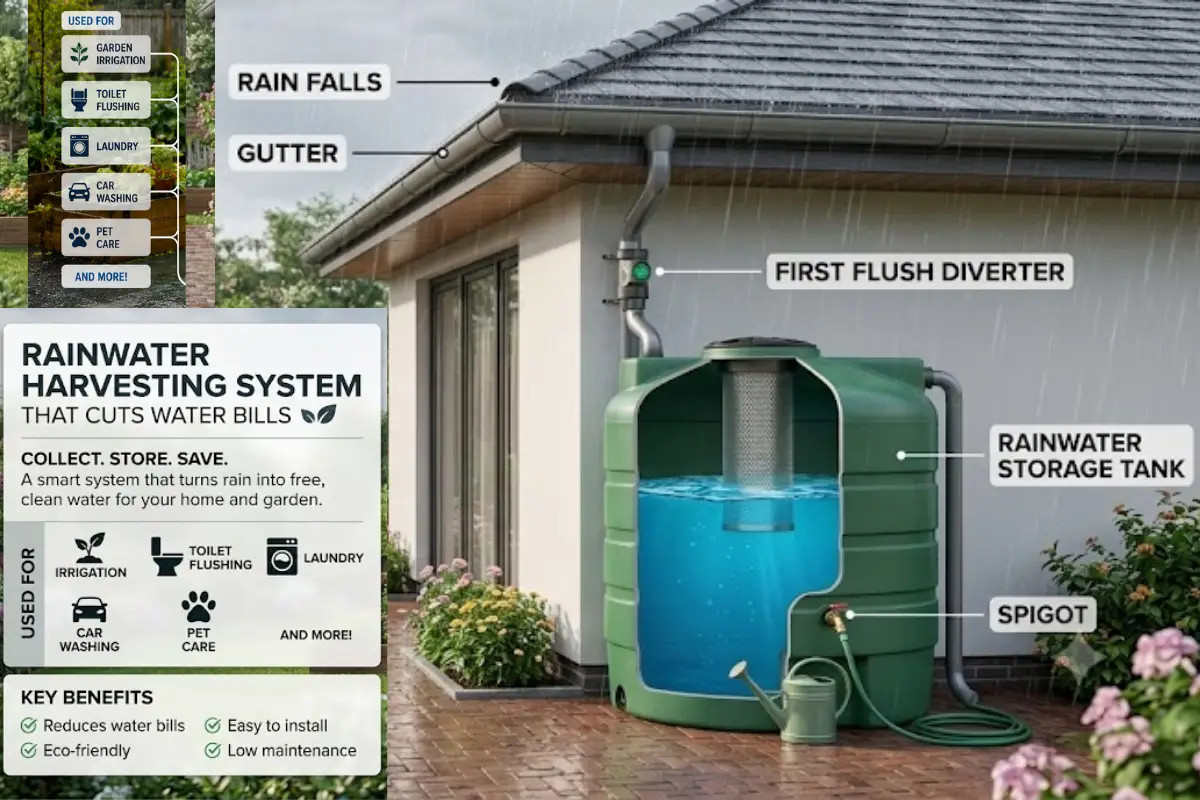
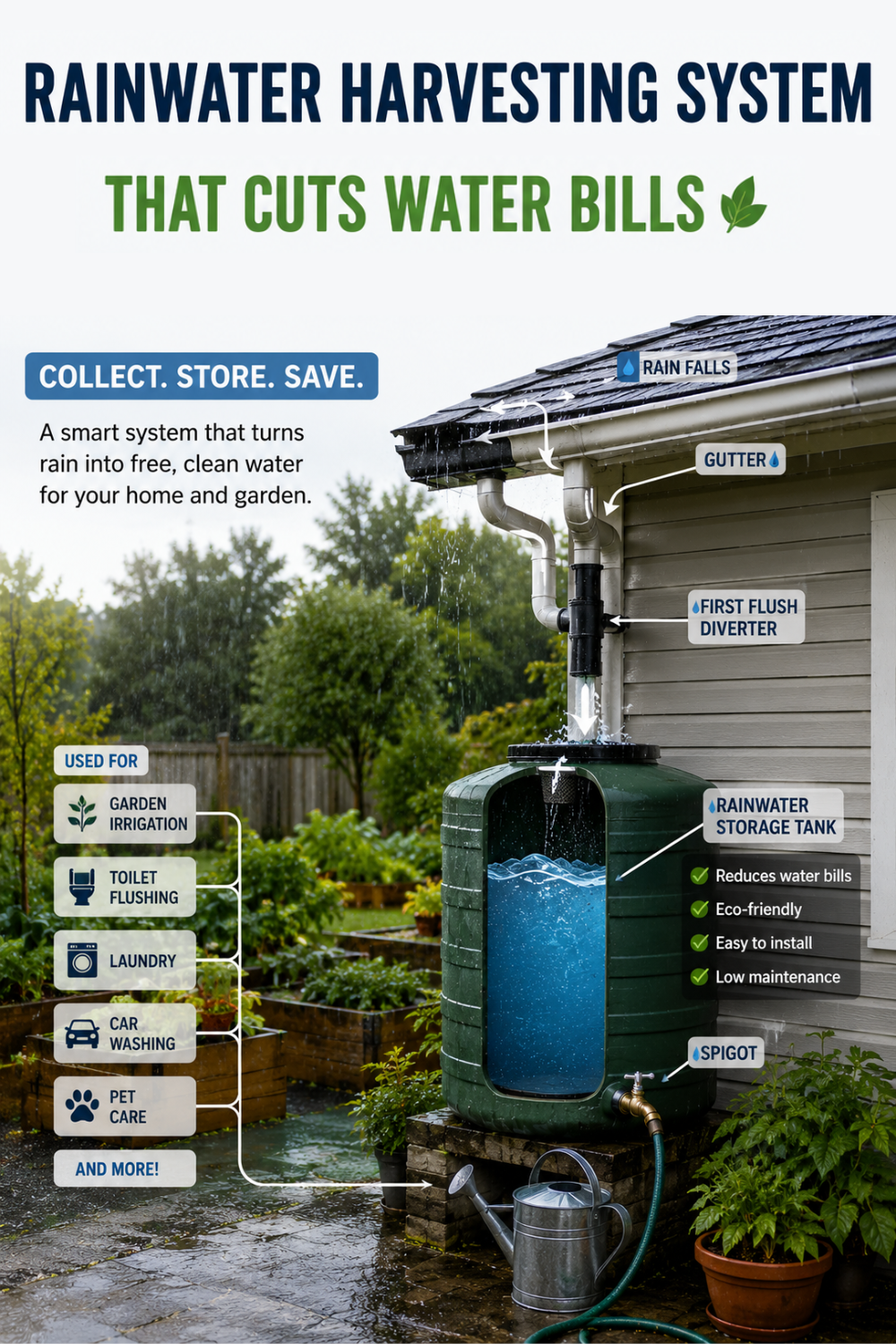
A rainwater harvesting system is designed to capture rain falling on your roof, direct it through gutters and filters, and store it inside tanks for future use.
Instead of relying entirely on municipal water, homeowners can use collected rainwater for numerous everyday tasks.
A typical system includes:
- Roof catchment area
- Gutters
- Downspouts
- Leaf guards
- First-flush diverter
- Water filter
- Storage tank
- Overflow outlet
- Distribution system
- Pump (optional)
The concept is simple, but the savings can be significant.
Why More Homeowners Are Installing Rainwater Systems
Water costs continue increasing in many regions.
At the same time:
- Droughts are becoming more common.
- Municipal water restrictions are increasing.
- Gardens require more irrigation.
- Sustainable living is becoming a priority.
Collecting rainwater helps solve all of these problems.
Many homeowners are surprised by how much water a single roof can collect during one storm.
For example:
A roof measuring 1,000 square feet can collect approximately 600 gallons from just one inch of rainfall.
Imagine multiplying that throughout an entire rainy season.
Major Benefits of a Rainwater Harvesting System
Lower Water Bills
One of the biggest advantages is reducing dependence on treated municipal water.
Instead of using expensive tap water for outdoor tasks, you can use free rainwater.
Common uses include:
- Watering gardens
- Washing vehicles
- Cleaning patios
- Filling decorative ponds
- Irrigating landscapes
The more outdoor water you replace, the lower your utility bill becomes.
Healthier Plants
Rainwater naturally contains fewer salts and chemicals than treated tap water.
Many gardeners notice healthier vegetables, flowers, fruit trees, and lawns after switching to harvested rainwater.
Plants simply respond better to natural rainfall.
Emergency Water Supply
Stored rainwater provides additional security during:
- Water shortages
- Droughts
- Utility outages
- Natural disasters
Having several hundred gallons stored can make a tremendous difference during emergencies.
Environmental Benefits
Rainwater harvesting helps:
- Reduce stormwater runoff
- Prevent erosion
- Lower demand on municipal systems
- Recharge groundwater
- Conserve freshwater resources
It’s one of the easiest eco-friendly home improvements available.
How a Rainwater Harvesting System Works
The process is surprisingly straightforward.
Step 1: Rain Falls on the Roof
Your roof acts as the collection surface.
Metal roofs generally provide the cleanest water, but asphalt shingles also work well for non-potable applications.
Step 2: Gutters Capture Water
Gutters direct rainwater toward downspouts.
Keeping gutters clean is essential for maintaining water quality.
Step 3: Leaf Screens Remove Debris
Before entering storage, screens remove:
- Leaves
- Twigs
- Insects
- Larger debris
This greatly reduces maintenance.
Step 4: First-Flush Diverter
The first rainfall usually carries dust, pollen, and bird droppings from the roof.
A first-flush diverter automatically redirects this initial dirty water away from the storage tank.
Afterward, cleaner water continues into storage.
Step 5: Filtration
Fine filters remove remaining particles before water reaches the storage tank.
Some advanced systems include multiple filtration stages.
Step 6: Storage Tank
Collected water is stored inside:
- Polyethylene tanks
- Concrete cisterns
- Fiberglass tanks
- Steel tanks
Tank size depends on rainfall and water usage.
Step 7: Water Distribution
Stored water can be accessed through:
- Gravity-fed faucets
- Garden hoses
- Irrigation systems
- Pressure pumps
Some homes even connect harvested rainwater to toilets or laundry systems where local regulations permit.
Choosing the Right Storage Tank
Storage capacity depends on several factors:
- Roof size
- Annual rainfall
- Household needs
- Available space
- Budget
Common sizes include:
- 50 gallons
- 100 gallons
- 250 gallons
- 500 gallons
- 1,000 gallons
- 2,500 gallons
- 5,000 gallons or more
Larger isn’t always better.
The ideal tank balances rainfall patterns with expected water use.
Best Uses for Harvested Rainwater
Collected rainwater is perfect for:
✅ Vegetable gardens
✅ Flower beds
✅ Fruit trees
✅ Greenhouses
✅ Lawn irrigation
✅ Washing cars
✅ Outdoor cleaning
✅ Livestock watering (where appropriate)
✅ Decorative ponds
✅ Compost moisture
In some regions, advanced filtration allows indoor non-potable use as well.
DIY Rainwater Harvesting vs. Professional Installation
DIY Systems
Ideal for:
- Garden irrigation
- Small properties
- Beginners
Typical cost:
$100–$800
Professional Systems
Better for:
- Whole-property water collection
- Underground tanks
- Pump systems
- Indoor plumbing integration
Typical cost:
$2,000–$10,000+
Common Mistakes to Avoid
Many first-time installers make avoidable mistakes.
Choosing a Tank That’s Too Small
Overflow means wasted water.
Ignoring Roof Maintenance
Dirty roofs reduce water quality.
Skipping First-Flush Systems
This significantly increases contamination.
Poor Tank Placement
Always install tanks on stable, level foundations.
Forgetting Overflow Management
Heavy rainfall requires safe overflow drainage.
Maintenance Tips
Fortunately, maintenance is minimal.
Monthly:
- Clean gutters
- Check filters
- Inspect downspouts
Seasonally:
- Remove tank sediment
- Test pumps
- Check overflow pipes
- Clean leaf guards
Annual inspections help maximize system lifespan.
Is Rainwater Safe?
Rainwater is generally excellent for outdoor applications.
If intended for drinking, cooking, or bathing, additional filtration and treatment are essential, and local regulations should always be followed.
Never assume harvested rainwater is potable without proper treatment.
How Much Money Can You Save?
Savings vary based on:
- Local water prices
- Rainfall
- Property size
- Outdoor water usage
Many homeowners reduce outdoor water consumption by 30–60%.
Over several years, the system often pays for itself through lower utility bills.
Frequently Asked Questions
Is rainwater harvesting legal?
Regulations vary by location. Always check your local rules before installing a system.
Can rainwater be used indoors?
Yes, in many areas with proper filtration and plumbing. Local building codes may apply.
How long does stored rainwater last?
When stored in a sealed tank away from sunlight, rainwater can remain usable for months with proper maintenance.
Do I need a pump?
Not always. Elevated tanks can supply water through gravity, while pumps provide stronger water pressure.
What’s the best roof for collecting rainwater?
Metal roofs generally provide the cleanest collection surface, though many roof types work well for non-potable use.
Final Thoughts
A rainwater harvesting system is more than just a way to lower water bills—it’s a practical investment in sustainability, resilience, and long-term savings. By capturing a resource that would otherwise go to waste, you can reduce dependence on municipal water, support a healthier garden, and prepare for periods of drought or water restrictions.
Whether you start with a simple rain barrel or invest in a larger storage system, every gallon you collect brings you one step closer to a more self-sufficient and eco-friendly home. The best time to start harvesting rainwater is before the next storm arrives.
0 Comment