
 admin
admin 5-Acre Homestead Layout: The Complete Guide to Creating a Self-Sufficient Heritage Farm
Table of Contents
Toggle5-Acre Homestead Layout: The Ultimate Guide to Building a Self-Sufficient Heritage Farm
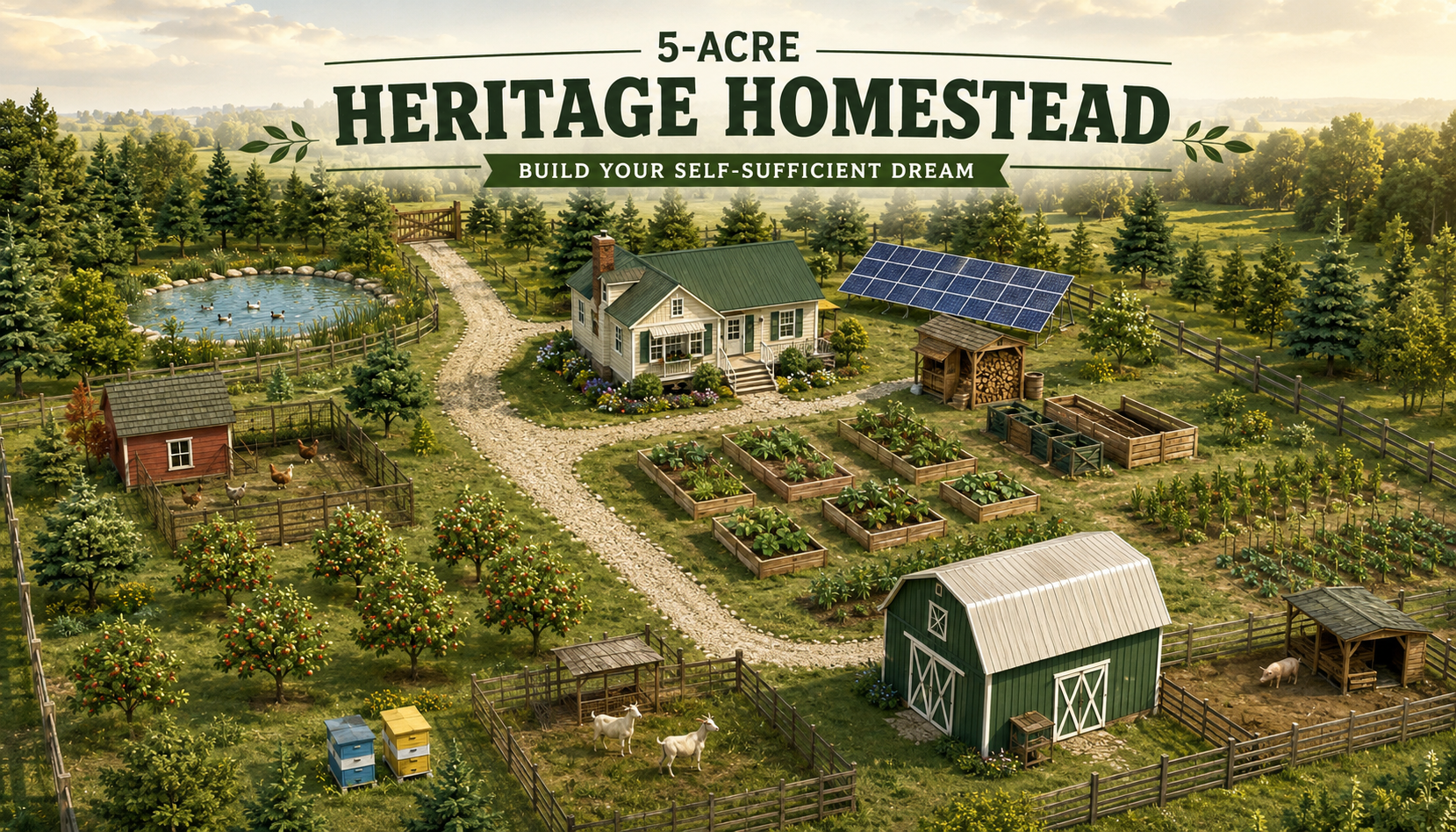
Imagine walking outside your front door each morning to collect fresh eggs, harvest vegetables, gather fruit from your own orchard, and watch ducks glide across a peaceful pond. A well-designed 5-acre homestead layout makes this dream surprisingly achievable.
Five acres provide enough space to produce a significant amount of your own food while remaining manageable for a family. Whether your goal is reducing grocery bills, living sustainably, or creating a legacy property for future generations, thoughtful planning is the foundation of a successful homestead.
This guide explores how to organize a five-acre property efficiently, using every section for food production, livestock, renewable energy, and long-term sustainability.
Why Five Acres Is an Ideal Homestead Size
Many experienced homesteaders consider five acres the “sweet spot.”
It offers enough room for:
- A comfortable home
- Large vegetable gardens
- Multiple livestock species
- Fruit and nut trees
- Water storage
- Renewable energy
- Wildlife habitat
- Future expansion
Unlike larger farms, five acres can often be maintained by one family without requiring expensive commercial equipment.
With smart planning, every square foot serves a purpose.
Overview of an Efficient 5-Acre Homestead
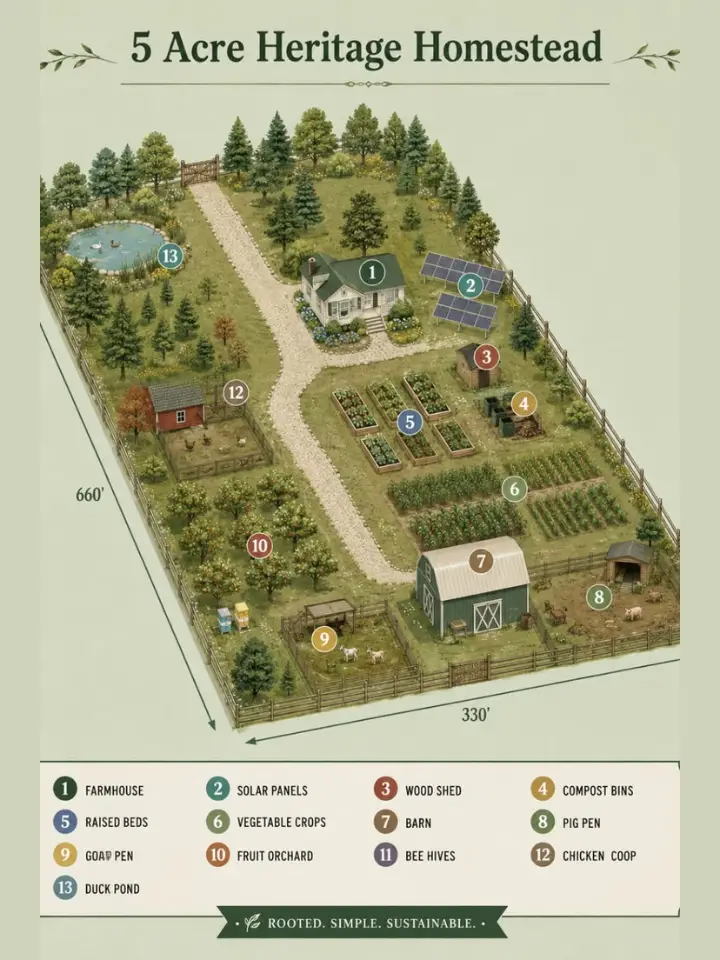
A successful homestead divides the property into zones based on daily use.
The layout shown includes:
- Farmhouse
- Solar power system
- Firewood storage
- Compost area
- Raised vegetable beds
- Field crops
- Barn
- Pig enclosure
- Goat pasture
- Orchard
- Beehives
- Chicken coop
- Duck pond
Each feature supports the others, creating an integrated ecosystem.
1. Farmhouse: The Center of the Homestead
Your home should sit near the center of daily activity.
Benefits include:
- Easy access to gardens
- Short walking distance to animals
- Better security
- Central water and electricity distribution
Surround the house with herbs, flowers, and perennial vegetables.
Popular choices include:
- Rosemary
- Thyme
- Lavender
- Mint
- Sage
- Chives
These plants attract pollinators while supplying the kitchen year-round.
2. Solar Panels for Energy Independence
Installing solar panels reduces dependence on utility companies.
Benefits include:
- Lower energy bills
- Backup during outages
- Power for water pumps
- Electric fencing
- Workshops
- Barn lighting
Battery storage allows excess energy collected during the day to be used at night.
Many homesteaders eventually pair solar systems with rainwater collection to become even more self-sufficient.
3. Wood Shed
A dedicated woodshed keeps firewood dry throughout the year.
Store at least one year’s supply.
Stack wood with good airflow to prevent mold and rot.
Besides heating, firewood supports:
- Outdoor cooking
- Pizza ovens
- Smokehouses
- Emergency backup heating
4. Compost Area
Nothing should go to waste on a homestead.
A compost station turns:
- Kitchen scraps
- Garden waste
- Leaves
- Chicken bedding
- Animal manure
into nutrient-rich compost.
Good compost improves:
- Soil fertility
- Water retention
- Microbial activity
This reduces fertilizer costs while producing healthier vegetables.
5. Raised Garden Beds
Raised beds are perfect for intensive food production.
Advantages include:
- Better drainage
- Warmer soil
- Easier weed control
- Higher yields
- Improved accessibility
Typical crops include:
- Lettuce
- Spinach
- Tomatoes
- Carrots
- Peppers
- Cucumbers
- Herbs
- Beans
Organize beds into crop rotations to reduce pests and replenish nutrients naturally.
6. Larger Vegetable Fields
Beyond raised beds, larger plots produce staple foods.
Excellent options include:
Corn
Ideal for:
- Human consumption
- Animal feed
- Compost material
Potatoes
A calorie-dense crop that stores well through winter.
Squash
Produces heavily while suppressing weeds.
Pumpkins
Useful for food, livestock feed, and seasonal sales.
Sunflowers
Provide seeds for people, chickens, and wildlife.
These crops require more space but greatly increase food security.
7. The Barn
A barn serves as the operational hub of the property.
It stores:
- Feed
- Equipment
- Hay
- Tools
- Seed
- Animal supplies
It also provides shelter during harsh weather.
Even a modest barn dramatically improves organization and efficiency.
8. Pig Pen
Pigs convert kitchen scraps and excess garden produce into high-quality meat.
Benefits include:
- Fast growth
- Excellent compost contribution
- Soil tilling
- Efficient feed conversion
Provide:
- Shade
- Mud wallows
- Fresh water
- Secure fencing
Rotate pigs periodically to prevent soil damage.
9. Goat Pasture
Goats are among the most versatile homestead animals.
They provide:
- Milk
- Cheese
- Yogurt
- Brush control
- Manure
Rotational grazing keeps pasture healthy while minimizing parasites.
Portable fencing makes this easier.
10. Fruit Orchard
A diverse orchard offers harvests throughout the growing season.
Plant a mixture of:
- Apples
- Pears
- Peaches
- Plums
- Cherries
- Apricots
Add berry bushes around the edges:
- Blueberries
- Raspberries
- Blackberries
- Gooseberries
Healthy orchards attract beneficial insects while producing food for decades.
11. Beehives
Bees dramatically improve pollination.
Benefits include:
- Larger harvests
- Better fruit production
- Honey
- Beeswax
- Increased biodiversity
Position hives near flowering plants but away from heavy foot traffic.
Plant pollinator-friendly flowers throughout the property.
12. Chicken Coop
Chickens are often the first livestock added to a homestead.
They provide:
- Fresh eggs
- Meat
- Natural pest control
- Compost ingredients
A movable chicken tractor allows birds to fertilize different sections of pasture.
Include nesting boxes, predator-proof fencing, and proper ventilation.
13. Duck Pond
A small pond serves multiple purposes.
It provides:
- Habitat for ducks
- Emergency irrigation
- Wildlife attraction
- Rainwater storage
- Fire protection reserve
Ducks also help reduce slugs and insects in nearby gardens.
Native aquatic plants naturally improve water quality.
How Everything Works Together
The beauty of a heritage homestead lies in how every element supports another.
For example:
- Chickens eat garden pests.
- Compost feeds vegetables.
- Vegetables feed livestock.
- Bees pollinate fruit trees.
- Orchard leaves become compost.
- Animals produce manure.
- Solar panels power irrigation.
- Rainwater fills the pond.
- Pond water irrigates crops.
Instead of isolated systems, everything becomes connected.
Sample Acre Breakdown
A practical distribution might look like this:
| Area | Approximate Size |
|---|---|
| House & yard | 0.5 acre |
| Gardens | 0.5 acre |
| Field crops | 1 acre |
| Orchard | 1 acre |
| Animal areas | 1 acre |
| Pond & woodland | 1 acre |
Every property is different, so adjust based on your climate and priorities.
Tips for Long-Term Success
Start small rather than building everything at once.
Focus first on:
- Water
- Soil
- Food production
- Compost
Then gradually add:
- Chickens
- Orchard
- Bees
- Goats
- Pigs
- Renewable energy
Expanding slowly allows you to gain experience while avoiding costly mistakes.
Common Mistakes to Avoid
Many beginners make the same planning errors.
Avoid:
- Building animal pens too far from the house
- Ignoring water access
- Planting trees without future spacing
- Underestimating storage needs
- Skipping compost systems
- Growing too many crops the first year
- Poor fencing
- Forgetting future expansion space
Good planning today prevents expensive redesigns later.
Seasonal Homestead Tasks
Spring
- Start seedlings
- Plant gardens
- Prepare compost
- Inspect fences
- Install beehives
Summer
- Harvest vegetables
- Irrigate crops
- Preserve food
- Manage weeds
- Monitor livestock
Autumn
- Collect fruit
- Plant garlic
- Store firewood
- Mulch gardens
- Process compost
Winter
- Plan crop rotations
- Repair equipment
- Prune fruit trees
- Maintain barns
- Review next year’s goals
Essential Tools
A productive 5-acre homestead benefits from having:
- Wheelbarrow
- Garden cart
- Shovels
- Rakes
- Broadfork
- Garden hose
- Drip irrigation system
- Pruning shears
- Chainsaw
- Compost thermometer
- Electric fencing tools
- Seed storage containers
Quality tools save time and reduce physical effort.
Frequently Asked Questions
Is five acres enough to become self-sufficient?
Yes. With careful planning, five acres can provide vegetables, fruit, eggs, honey, meat, and even renewable energy for many families.
What animals are best for a beginner homestead?
Chickens are the easiest starting point, followed by ducks, goats, and eventually pigs if space and local regulations allow.
How many fruit trees fit on one acre?
Depending on spacing and tree type, an acre can typically accommodate 80–150 standard fruit trees or more with dwarf varieties.
Do I need solar panels?
No, but they can significantly reduce energy costs and provide backup power for essential homestead systems.
How long does it take to build a complete homestead?
Most successful homesteads develop gradually over 3–10 years, allowing time to build skills, improve the land, and spread out costs.
Final Thoughts
A thoughtfully planned 5-acre homestead layout can provide far more than fresh food—it creates resilience, sustainability, and a lifestyle rooted in self-reliance. By combining gardens, orchards, livestock, renewable energy, composting, and natural ecosystems, every part of the property works together to support the whole.
You don’t need to build everything at once. Start with the essentials, improve your soil, learn from each season, and expand as your skills grow. Over time, your five acres can become a thriving heritage homestead that nourishes both your family and the land for generations to come.
0 Comment