
 admin
admin Rocket Oven Guide: How It Works, Benefits, and How to Build an Efficient Outdoor Baking System
Rocket Oven Guide: How It Works, Benefits, and How to Build an Efficient Outdoor Baking System
Introduction: A New Way to Bake with Less Wood
In a world where energy efficiency and sustainability matter more than ever, the rocket oven stands out as a brilliant innovation. This compact, high-performance outdoor oven uses a clever airflow design to generate intense heat while consuming very little firewood. It’s a favorite among homesteaders, off-grid enthusiasts, permaculture gardeners, and anyone who values practical, eco-friendly cooking methods.
Unlike traditional wood-fired ovens that require large amounts of fuel and long heating times, a rocket oven concentrates heat exactly where it is needed. The result is faster cooking, cleaner combustion, and better temperature control—all with fewer resources.
This guide will explain how a rocket oven works, its main components, benefits, construction basics, and practical uses. Whether you want to bake bread in your backyard or build a complete off-grid kitchen, this system offers a powerful and sustainable solution.
What Is a Rocket Oven?
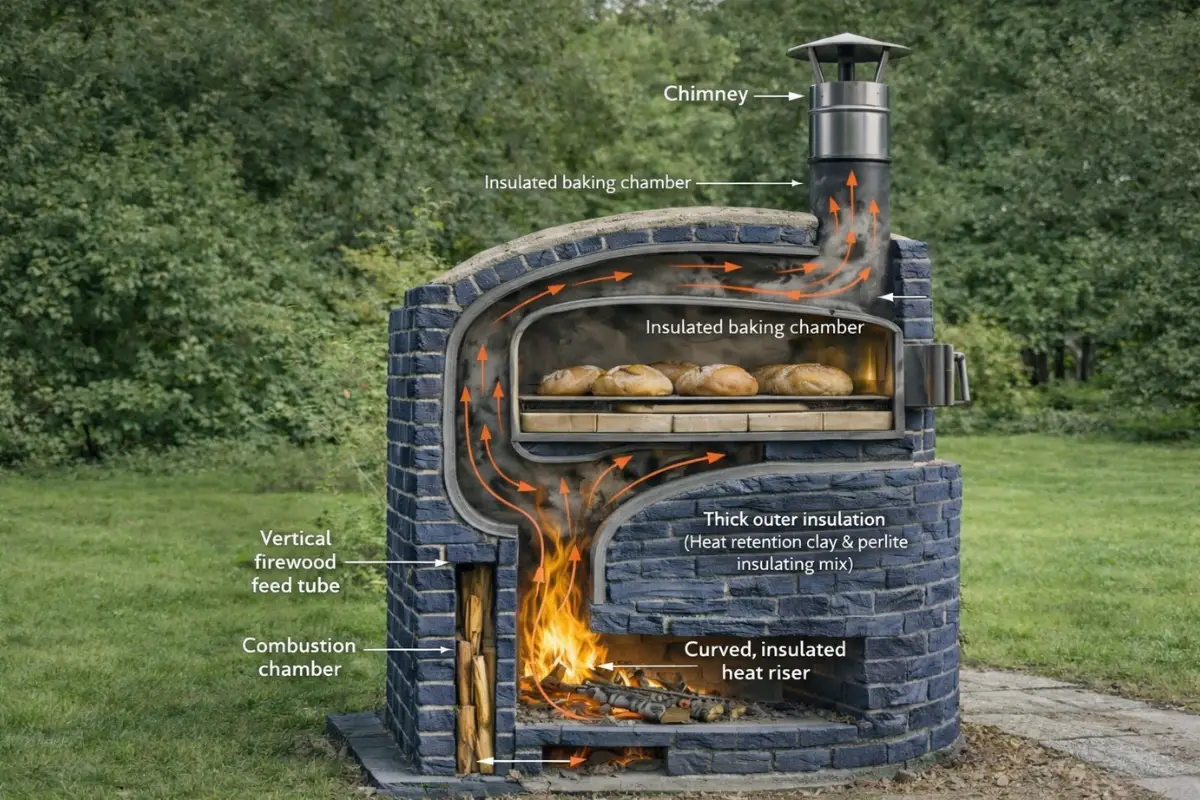
A rocket oven is a type of wood-fired oven that uses the rocket stove principle. This design creates a strong natural draft that pulls air into the combustion chamber, producing a hot, clean burn. The heat then travels through an insulated channel around the baking chamber before exiting through the chimney.
The name “rocket” comes from the sound and speed of the airflow. As hot gases rush upward through the insulated heat riser, they create a powerful draft similar to a rocket engine.
This efficient combustion system allows the oven to reach high temperatures quickly, making it ideal for baking, roasting, and cooking full meals.
The Rocket Principle: How It Works
At the heart of the rocket oven is a simple but powerful concept: controlled airflow and insulated combustion.
Here is the basic process:
- Small pieces of firewood are placed vertically in the feed tube.
- The wood burns in a compact combustion chamber.
- Hot gases rise rapidly through the insulated heat riser.
- The heat circulates around the baking chamber.
- Warm air exits through the chimney.
Because the combustion area is insulated, the fire burns hotter and more completely. This reduces smoke, improves efficiency, and extracts more energy from each piece of wood.
Main Components of a Rocket Oven
Vertical Firewood Feed Tube
This vertical chamber holds the firewood. Gravity slowly feeds the wood into the combustion area, ensuring a steady, controlled burn.
Combustion Chamber
This is where the fire actually burns. The chamber is designed to keep the fire concentrated and well-oxygenated.
Insulated Heat Riser
The heat riser is a vertical, insulated tunnel that allows hot gases to rise rapidly. This is the engine of the rocket system, creating the powerful draft.
Baking Chamber
The baking chamber sits above or around the heat path. This is where bread, pizza, or other dishes are placed. The chamber receives even heat from all sides.
Outer Insulation Layer
A thick layer of insulation surrounds the oven. Materials like clay, sand, perlite, or vermiculite help retain heat and improve efficiency.
Chimney
The chimney releases exhaust gases and maintains airflow through the system. It also helps stabilize the draft and keeps smoke away from the cooking area.
Why Rocket Ovens Are So Efficient
Rocket ovens are designed to extract maximum energy from minimal fuel. Here’s why they outperform traditional wood ovens:
- Insulated combustion keeps temperatures high.
- Strong draft improves oxygen flow.
- Complete combustion reduces smoke.
- Heat is directed exactly where needed.
- Thick insulation prevents heat loss.
Because of these factors, a rocket oven can use up to 70% less wood than a traditional outdoor oven.
Key Benefits of a Rocket Oven
1. Low Fuel Consumption
Rocket ovens use small sticks and scrap wood instead of large logs. This makes them ideal for areas where firewood is limited.
2. Cleaner Burning
The high-temperature combustion reduces smoke and soot. This creates a more pleasant cooking experience and less environmental impact.
3. Fast Heating Time
Rocket ovens heat up quickly, often reaching baking temperatures in under 30 minutes.
4. Even Heat Distribution
The design channels heat around the baking chamber, ensuring consistent temperatures.
5. Ideal for Off-Grid Living
No electricity or gas is required. A small pile of sticks is enough to cook a full meal.
What You Can Cook in a Rocket Oven
Rocket ovens are incredibly versatile. They can handle many types of cooking:
- Artisan bread
- Pizza
- Roasted vegetables
- Meat and poultry
- Casseroles
- Cookies and pastries
- Slow-cooked stews
Because of the steady, radiant heat, foods cook evenly and develop rich, wood-fired flavors.
Building a Rocket Oven: Basic Concept
You don’t need expensive materials to build a rocket oven. Many homesteaders use simple, natural, or recycled components.
Common Materials
- Fire bricks
- Clay and sand mix
- Perlite or vermiculite
- Metal pipe for chimney
- Steel or cast-iron baking chamber
Basic Construction Steps
- Build a solid foundation using bricks or concrete.
- Construct the feed tube and combustion chamber.
- Install the insulated heat riser.
- Add the baking chamber above the heat path.
- Surround the oven with insulation.
- Install the chimney.
The key is proper insulation and correct airflow design.
Best Location for a Rocket Oven
Placement is important for safety and performance.
Choose a location that is:
- Outdoors or in a well-ventilated area
- On stable, fireproof ground
- Protected from strong winds
- Away from flammable structures
Many people build rocket ovens as part of an outdoor kitchen or garden cooking area.
Tips for Efficient Rocket Oven Use
Use Dry, Small Wood
Thin sticks burn better than large logs. Dry wood produces more heat and less smoke.
Feed Wood Gradually
Add small amounts of wood regularly to maintain steady heat.
Preheat the Oven
Allow the oven to heat fully before baking for best results.
Monitor the Airflow
Keep the feed tube clear so oxygen can flow freely.
Rocket Oven vs Traditional Wood Oven
| Feature | Rocket Oven | Traditional Wood Oven |
|---|---|---|
| Fuel use | Very low | High |
| Heating time | Fast | Slow |
| Smoke production | Low | High |
| Size | Compact | Large |
| Efficiency | High | Moderate |
Rocket ovens are perfect for small spaces and sustainable living.
Maintenance and Safety
Rocket ovens are simple but still require basic care.
Cleaning
- Remove ash regularly.
- Keep the chimney clear.
Inspection
- Check for cracks in the insulation.
- Ensure airflow passages are not blocked.
Safety Tips
- Never leave the oven unattended.
- Use heat-resistant gloves.
- Keep water or sand nearby in case of sparks.
Rocket Ovens in Sustainable Living
Rocket ovens fit perfectly into eco-friendly lifestyles. They are often used in:
- Permaculture gardens
- Tiny house communities
- Off-grid homes
- Outdoor kitchens
- Emergency cooking setups
Their ability to cook efficiently with minimal fuel makes them ideal for self-sufficient living.
Common Mistakes to Avoid
When building or using a rocket oven, avoid these errors:
- Using wet or large firewood
- Poor insulation around the heat riser
- Incorrect chimney size
- Blocking airflow in the feed tube
- Placing the oven too close to flammable materials
Is a Rocket Oven Right for You?
A rocket oven is a great choice if you:
- Want to reduce firewood use
- Enjoy outdoor cooking
- Live off-grid or semi-off-grid
- Practice sustainable living
- Want a compact baking system
It offers powerful performance in a small, efficient design.
Frequently Asked Questions
How hot can a rocket oven get?
Most rocket ovens can reach temperatures between 250°C and 350°C (480°F to 660°F), depending on the design.
Can I cook daily with a rocket oven?
Yes. Many people use them as their primary outdoor cooking system.
Do rocket ovens produce smoke?
Very little. The insulated combustion burns wood more completely.
How much wood does it use?
Usually small sticks or branches are enough for a full baking session.
Conclusion: A Small Oven with Big Potential
Rocket ovens prove that smart design can outperform size and fuel consumption. By using the natural movement of hot air and insulating the combustion process, these ovens deliver powerful heat with minimal wood.
They are simple to build, easy to maintain, and incredibly efficient. Whether you want to bake fresh bread in your garden, create an off-grid kitchen, or reduce your environmental impact, a rocket oven offers a practical and sustainable solution.
With the right design and proper use, this compact oven can become one of the most valuable tools in a self-sufficient home.
0 Comment