
 admin
admin How to Propagate Basil from Cuttings: The Complete Step-by-Step Guide
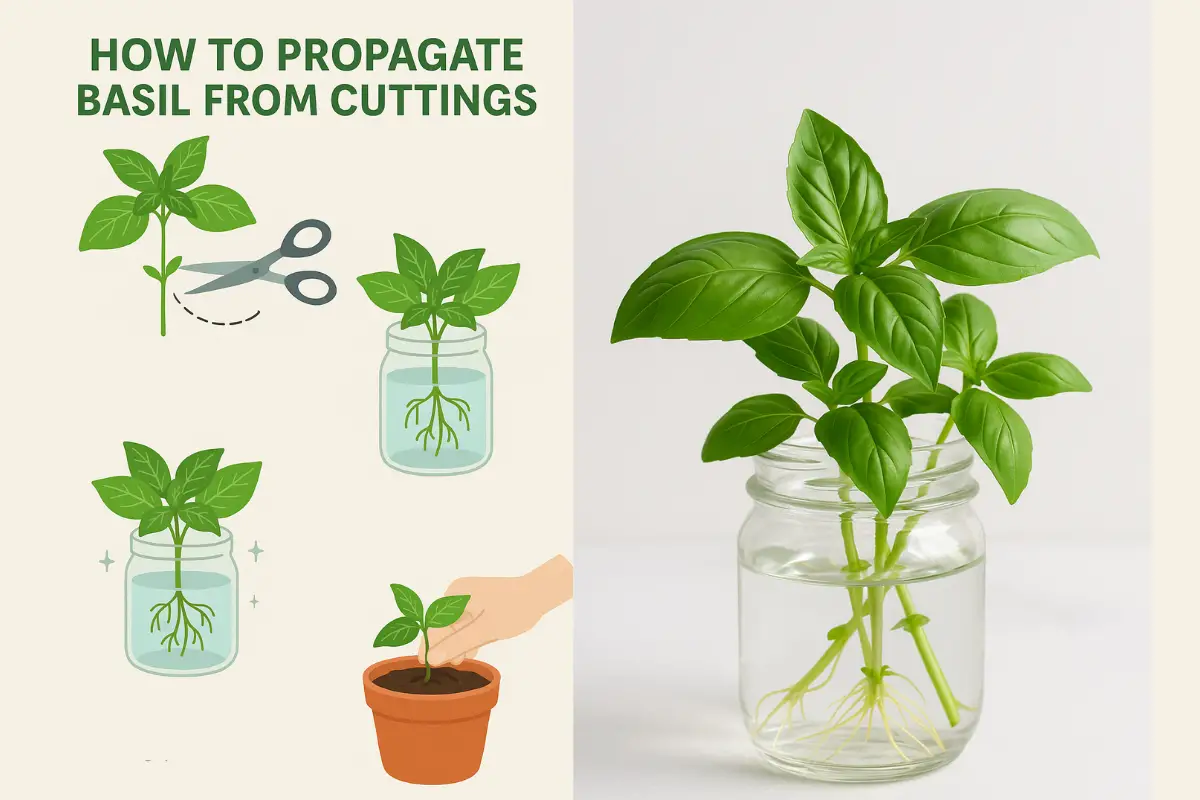
How to Propagate Basil from Cuttings
Fresh basil adds life to any dish — from Italian pasta to summer salads and homemade pesto. But if you’ve ever bought a basil plant that wilted after a few weeks, you’re not alone. The good news? You don’t have to start over with seeds every time. With a single cutting, you can create an endless supply of fragrant basil plants that thrive indoors or outdoors.
In this detailed guide, you’ll learn how to propagate basil from cuttings, step by step, including how to root it in water, transplant it into soil, care for it as it grows, and even how to avoid common mistakes beginners make. By the end, you’ll know exactly how to turn one basil stem into a thriving mini-garden of herbs.
What Is Propagation and Why Does It Work?
Propagation simply means creating new plants from existing ones. For basil, this is done through a process called stem cutting propagation, where you snip off a healthy stem and encourage it to develop roots in water or soil. It’s a natural, simple, and satisfying way to clone your favorite basil plant.
Plants like basil are genetically designed to reproduce this way. Each stem contains nodes — small growth points that can turn into new roots when exposed to water and indirect sunlight. This means you can regenerate a new basil plant that’s identical to the parent, preserving its flavor, aroma, and growth pattern.
Propagation is not only a fun experiment but also a sustainable gardening habit that saves money and reduces waste.
Benefits of Propagating Basil from Cuttings
Growing basil from cuttings has multiple advantages — especially for home gardeners who want continuous fresh herbs without constant replanting.
You Save Money and Time
Seed germination can take up to 10–15 days, and not every seed sprouts. With cuttings, you skip that uncertainty. The process is faster, often producing new plants within 2–3 weeks.
You Preserve Your Favorite Variety
Not all basil plants taste the same. Some are sweeter, some more aromatic, others more peppery. Propagation ensures you keep the exact flavor profile you love.
You Get a Healthier, Hardier Plant
Cuttings from strong parent plants inherit their vigor. These clones are often more resistant to stress, adapting quickly when transplanted.
You Create a Sustainable Herb Garden
Instead of buying new basil every season, propagation lets you multiply what you already have, making your kitchen greener and more self-sufficient.
It’s Beginner-Friendly
Even if you’ve never grown a plant before, basil propagation is nearly foolproof. With just a jar of water and a few minutes of care, anyone can succeed.
Step 1: Choosing and Cutting the Right Stem
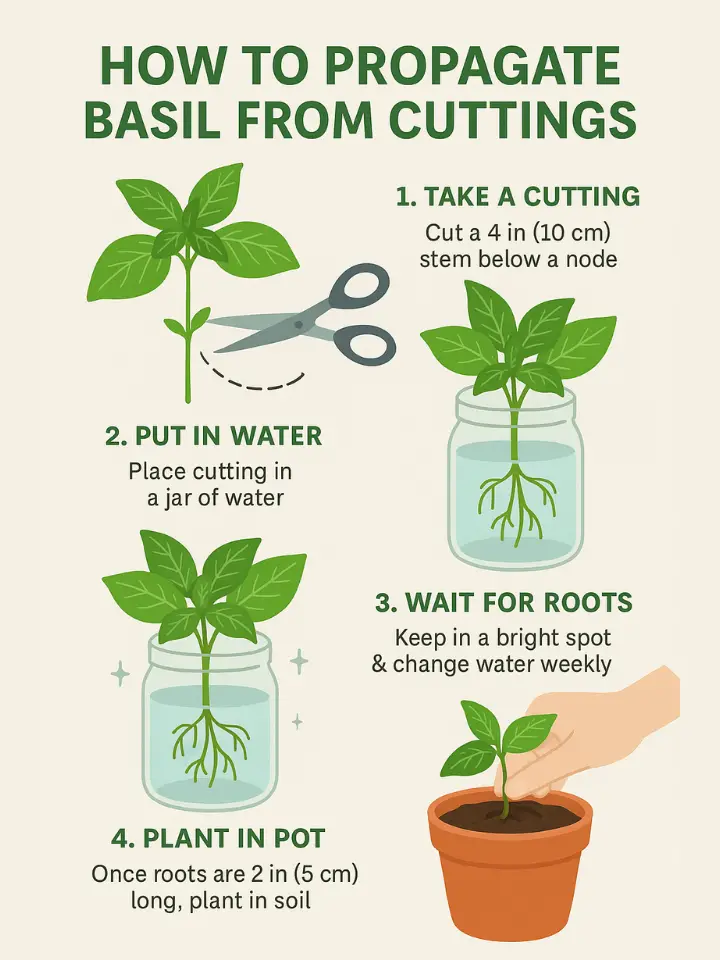
Start with a mature basil plant that’s free of pests or diseases. The goal is to select a healthy stem with vibrant green leaves and no flowers.
- Using sharp, sterilized scissors or pruning shears, cut a stem that’s 10–12 cm (4–5 inches) long.
- Make your cut just below a leaf node — this is where new roots will form.
- Remove the lower leaves, leaving 3–4 leaves at the top.
- Avoid stems that already have flowers or buds, as these are focused on reproduction, not root growth.
Pro Tip: The best time to take a cutting is in the morning, when the plant is fully hydrated and less stressed by heat.
Step 2: Rooting the Basil Cutting in Water
Now that you have your cutting, it’s time to let nature do its magic. Rooting basil in water is one of the simplest ways to start propagation.
- Fill a clear glass jar with room-temperature water.
- Place the cutting in the jar, ensuring the lower half (including the nodes) is submerged but the leaves remain above water.
- Position the jar in a bright location with indirect sunlight — such as a kitchen windowsill.
- Replace the water every 2–3 days to prevent bacterial buildup and maintain oxygen levels.
In a week or two, you’ll start to see tiny white roots emerging. These roots will continue to grow and strengthen over time.
Common mistake to avoid: Don’t place the jar in direct sun — intense light heats the water, leading to wilting or rot.
Step 3: Understanding Root Growth
Watching the roots grow is one of the most satisfying parts of propagation. During the first week, the cutting uses stored nutrients from its stem to survive. Once roots appear, they begin absorbing water and oxygen directly.
What to look for:
- Small white or beige roots forming below the nodes
- A healthy green stem with no slime or discoloration
- No smell — if the water smells foul, change it immediately
Once the roots are 5 cm (2 inches) long, your basil cutting is ready to transition to soil.
Patience pays off: If you plant the cutting too soon, it may struggle to adapt. Allow enough time for strong root growth.
Step 4: Transplanting Basil into Soil
Transplanting is where your cutting becomes a true plant. Here’s how to do it right:
- Prepare a small pot with drainage holes.
- Fill it with light, well-draining soil — ideally a mix of potting soil, compost, and perlite.
- Make a small hole in the soil with your finger or a stick.
- Gently place the rooted cutting in the hole and cover the roots completely.
- Press the soil lightly to hold the stem in place.
- Water thoroughly but gently.
Keep your new basil plant in a warm, bright spot (20–25°C) and out of direct midday sunlight for the first week. This helps the plant adjust to its new environment without shock.
Step 5: Caring for Your New Basil Plant
Your basil plant is now growing on its own! To keep it healthy and productive, follow these care tips:
Watering
Basil loves moisture but dislikes soggy roots. Water when the top 2 cm of soil feels dry. Use a watering can with a narrow spout to avoid splashing the leaves.
Light
Place the pot in a location that receives at least 6 hours of sunlight daily. If growing indoors, a south-facing window or LED grow light works perfectly.
Pruning
Regular pruning encourages bushy growth. Pinch off the top pair of leaves once your basil has 6–8 leaves. This redirects energy to side branches, creating a fuller plant.
Prevent Flowering
If your basil starts producing flowers, pinch them off immediately. Flowering changes the plant’s chemistry, making the leaves taste bitter.
Feeding
Feed your basil every 2–3 weeks with a natural fertilizer — compost tea, diluted fish emulsion, or worm castings are excellent organic choices.
Step 6: Troubleshooting Common Problems
Even the easiest plants can run into small issues. Here’s how to identify and fix them:
Problem: Slimy Stem or Black Roots
Cause: Water not changed often enough
Fix: Cut off the damaged section and refresh the water every few days.
Problem: Wilted Leaves
Cause: Too much sun or too little water
Fix: Move the jar or pot to a shadier spot and keep the soil slightly moist.
Problem: Yellowing Leaves
Cause: Nutrient deficiency or overwatering
Fix: Use a balanced organic fertilizer and allow the top soil to dry between waterings.
Problem: Small Gnats Around the Pot
Cause: Excess moisture in the soil
Fix: Let the soil dry out for a few days and sprinkle cinnamon powder to deter insects.
Step 7: Expanding Your Basil Garden
Once you master basil propagation, you can create a continuous growth cycle. Every few weeks, take new cuttings from your healthiest plant and repeat the process. This way, you’ll always have fresh basil available — even if older plants begin to age or flower.
You can also experiment with different basil varieties, such as:
- Sweet Genovese – classic for Italian cuisine
- Thai Basil – spicy and aromatic for Asian dishes
- Purple Basil – beautiful color for salads and decoration
- Lemon Basil – fresh, citrus-like flavor for summer recipes
Mixing varieties creates a visually stunning and delicious herb garden.
Bonus: Rooting Basil Directly in Soil
While propagating in water is easiest for beginners, you can also root basil cuttings directly in soil.
- Dip the cut end of your stem in a small amount of rooting hormone (optional).
- Plant it in a small pot filled with moist, well-draining soil.
- Cover it loosely with a clear plastic bag to maintain humidity.
- Place in bright, indirect light and keep the soil damp but not wet.
In about two weeks, give the stem a gentle tug. If it resists, it has rooted successfully. Remove the plastic bag and care for it as usual.
Propagation as a Sustainable Habit
Learning how to propagate basil from cuttings isn’t just a gardening trick — it’s part of a sustainable lifestyle. Instead of buying plastic-packaged herbs, you grow your own. This reduces waste, saves money, and helps the planet.
Plus, the joy of nurturing life from a single cutting is deeply rewarding. Each rooted stem is proof of patience, care, and connection to nature — small acts that bring balance to everyday life.
Frequently Asked Questions (FAQ)
How long does it take to root basil cuttings?
Usually between 7 and 14 days, depending on light, temperature, and water quality. In warmer, brighter conditions, roots may appear sooner.
Can I propagate basil all year round?
Yes, especially if you grow it indoors near a window or under artificial light. Basil thrives in temperatures above 18 °C.
How many times can I propagate basil?
Endlessly! As long as your parent plant is healthy, you can keep taking cuttings and growing new ones.
Can I use tap water for propagation?
Yes, but if your water is heavily chlorinated, let it sit uncovered for 24 hours before using it. This allows chlorine to evaporate.
Should I use fertilizer while the cutting is in water?
No — nutrients aren’t needed until the roots are planted in soil. Fertilizer in water can actually damage new roots.
How do I keep basil from dying after transplanting?
Acclimate it gradually — avoid harsh sunlight for the first few days, keep soil moist, and avoid overwatering.
Final Thoughts: Grow Your Own Green Haven
Propagating basil from cuttings is one of the most rewarding gardening experiences — simple enough for beginners, yet satisfying even for experts. With minimal tools and effort, you can turn one basil stem into a lush collection of aromatic plants ready to flavor your meals year-round.
Each cutting is a small act of sustainability, beauty, and self-reliance. Whether you grow basil on your windowsill or your balcony, propagation connects you to the natural rhythm of life — a reminder that growth begins with care.
So next time you trim your basil, don’t throw those stems away — give them water, light, and love. In a few short weeks, they’ll thank you with a whole new generation of green life.
0 Comment