
 admin
admin Best Frog Balls Pickle Recipe (Pickled Brussels Sprouts): The Complete Guide
Frog Balls Pickle Recipe (Pickled Brussels Sprouts)
Pickled Brussels sprouts, often humorously nicknamed “frog balls,” are one of the most underrated homemade pickles you can make. Crisp, tangy, slightly spicy, and deeply savory, they transform an ordinary vegetable into a bold snack, garnish, or side dish that improves with time. Despite the playful name, this recipe is rooted in traditional pickling methods that preserve flavor, texture, and nutrients.
This comprehensive guide walks you through everything you need to know about frog balls pickles: what they are, why they’re so popular, how to make them safely at home, how to customize the flavor, and how to store and serve them for maximum enjoyment.
What Are Frog Balls?
“Frog balls” is a tongue-in-cheek name for whole Brussels sprouts, especially when pickled and stored in jars. The round shape and vibrant green color inspired the nickname, which has become popular on social media, farmers’ markets, and home-pickling communities.
Despite the name, the ingredient is simply Brussels sprouts. When pickled, they lose their bitterness and take on a bright, garlicky, vinegar-forward flavor with a satisfying crunch.
Why Pickle Brussels Sprouts?
Brussels sprouts are often associated with roasting or steaming, but pickling brings out an entirely different character.
Pickling Brussels sprouts:
- Reduces bitterness
- Enhances crunch
- Adds long-lasting flavor
- Extends shelf life
- Creates a versatile condiment or snack
They pair beautifully with rich foods, grilled meats, cheese boards, and even cocktails.
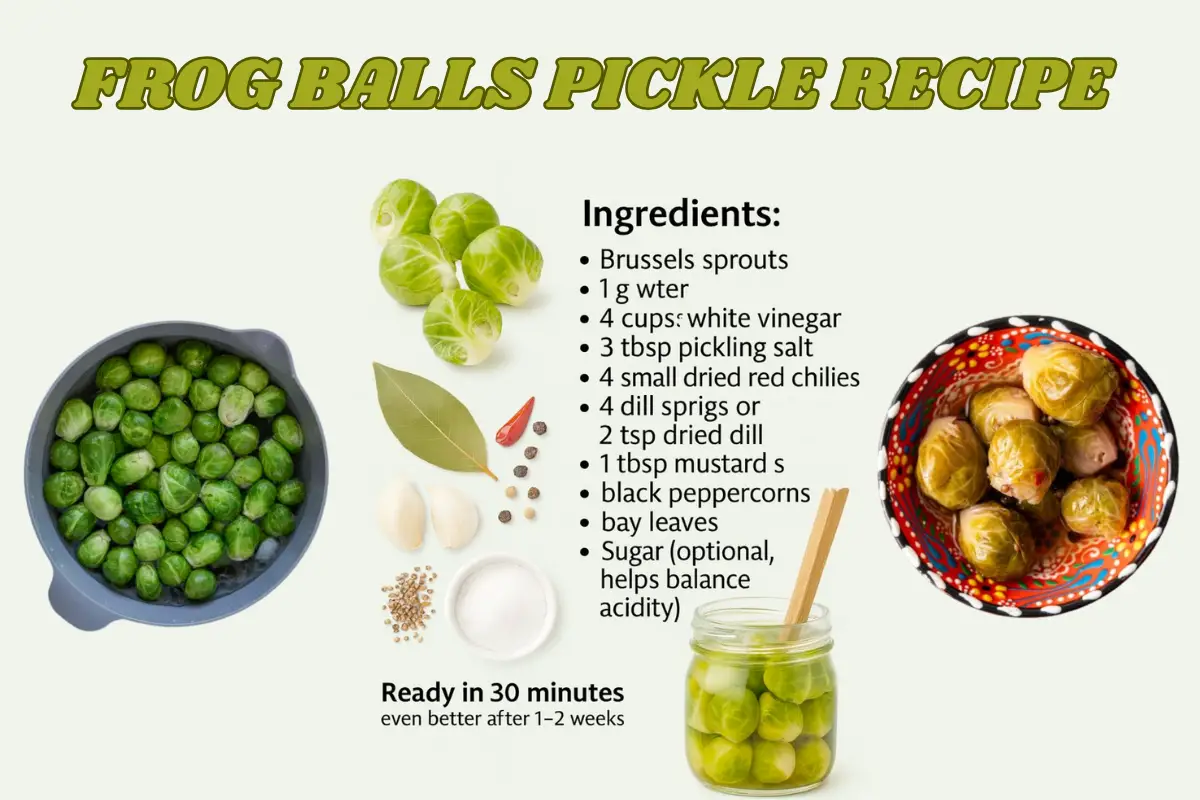
Ingredients for Frog Balls Pickle Recipe
This recipe is designed for quick pickling but develops deeper flavor over time.
Main ingredients:
- Fresh Brussels sprouts
Pickling liquid:
- 1 gallon water
- 4 cups white vinegar
- 3 tablespoons pickling salt
Flavorings:
- 4 small dried red chilies
- 4 dill sprigs or 2 teaspoons dried dill
- 1 tablespoon mustard seeds
- Black peppercorns
- Bay leaves
- Garlic cloves
Optional:
- Sugar (helps balance acidity)
All ingredients serve a purpose. Vinegar provides acidity for preservation, salt draws moisture and enhances flavor, spices add depth, and sugar (if used) rounds out sharpness.
Choosing the Best Brussels Sprouts
For the best pickled result:
- Choose small to medium Brussels sprouts
- Look for firm, tightly closed leaves
- Avoid yellowing or soft spots
- Try to keep sizes uniform for even pickling
Freshness matters. The crisper the sprouts, the better the final texture.
Step-by-Step Frog Balls Pickle Recipe
1. Prepare the Brussels Sprouts
Trim the stem ends and remove any loose outer leaves. Rinse thoroughly under cold water. If sprouts are large, slice them in half to help the brine penetrate evenly.
2. Blanch for Better Texture
Bring a pot of water to a boil. Add Brussels sprouts and blanch for 3 minutes. Immediately transfer to an ice bath to stop cooking. This step:
- Preserves bright green color
- Reduces raw bitterness
- Improves crunch after pickling
Drain well.
3. Prepare the Pickling Brine
In a large pot, combine:
- Water
- White vinegar
- Pickling salt
- Optional sugar
Bring to a boil, stirring until salt dissolves completely.
4. Pack the Jars
In clean, sterilized jars, layer:
- Brussels sprouts
- Garlic cloves
- Dried red chilies
- Dill
- Mustard seeds
- Peppercorns
- Bay leaves
Pack tightly but without crushing the sprouts.
5. Add the Brine
Carefully pour hot brine over the sprouts, ensuring everything is fully submerged. Leave a small headspace at the top of the jar.
6. Seal and Cool
Close jars with lids and allow them to cool at room temperature.
7. Chill and Wait
Refrigerate for at least 30 minutes before tasting. For best flavor, wait 1 to 2 weeks.
How Long Do Pickled Frog Balls Last?
Refrigerator pickles:
- Ready in 30 minutes
- Best after 1–2 weeks
- Keep up to 2 months refrigerated
If you use proper canning methods and processing, shelf-stable storage is possible, but this recipe is designed primarily for refrigerator pickling.
Flavor Profile: What to Expect
Pickled Brussels sprouts are:
- Tangy
- Garlicky
- Slightly spicy
- Herbaceous
- Crunchy
The flavor deepens over time as the sprouts absorb vinegar, dill, and spices.
Popular Variations
Spicy Frog Balls
Add extra dried chilies or a teaspoon of chili flakes for heat lovers.
Sweet and Tangy
Increase sugar slightly and add sliced carrots for balance.
Mediterranean Style
Add lemon peel, coriander seeds, and oregano.
Smoky Version
Include smoked peppercorns or a pinch of smoked paprika.
Garlic-Heavy Pickles
Double the garlic cloves for a bold, savory jar.
Nutritional Benefits of Pickled Brussels Sprouts
Brussels sprouts are naturally rich in:
- Fiber
- Vitamin C
- Vitamin K
- Antioxidants
Pickling preserves many nutrients while making the vegetable easier to digest for some people. The fermentation-style acidity can also support gut health, especially when sugar is minimal.
Approximate benefits per serving:
- Low calories
- High fiber
- No fat
- Naturally gluten-free
- Vegan-friendly
Serving Ideas
Pickled frog balls are incredibly versatile.
Serve them:
- As a snack straight from the jar
- On charcuterie boards
- Chopped into potato salad
- As a garnish for Bloody Marys
- Alongside grilled sausages
- In grain bowls or wraps
- With cheese and crusty bread
They also make a unique homemade gift.
Common Mistakes to Avoid
- Skipping blanching: leads to bitterness and dull color
- Using table salt: causes cloudy brine
- Not submerging vegetables fully
- Using old or soft Brussels sprouts
- Overcrowding jars without liquid coverage
Attention to detail makes a big difference in final quality.
Safety Tips for Pickling at Home
- Always use clean, sterilized jars
- Use vinegar with at least 5% acidity
- Keep refrigerator pickles cold
- Discard if mold, slime, or off smells develop
- Never reduce vinegar ratios in the recipe
Following these guidelines ensures safe, delicious results.
Why This Recipe Works So Well
This frog balls pickle recipe balances acidity, salt, and aromatics perfectly. The blanching step softens bitterness, while spices infuse slowly over time. The result is a pickle that is crisp, flavorful, and addictive.
It’s simple enough for beginners but impressive enough for seasoned home picklers.
Frequently Asked Questions
Do pickled Brussels sprouts smell strong?
They have a noticeable vinegar aroma, but pickling significantly reduces sulfur smells compared to cooking.
Can I use apple cider vinegar?
Yes, but expect a slightly darker color and fruitier flavor.
Are frog balls spicy?
Mild by default. Heat depends on the amount of chili used.
Can I ferment instead of pickle?
Yes, but fermentation requires different salt ratios and no vinegar.
Do I need sugar?
No. Sugar is optional and only balances acidity.
Can kids eat them?
Yes, if you reduce spice and acidity slightly.
Final Thoughts
Frog balls pickles prove that Brussels sprouts deserve far more credit than they get. Pickling transforms them into a crunchy, tangy, deeply satisfying treat that works as a snack, condiment, or show-stopping side.
Whether you’re new to pickling or looking to expand your homemade pantry, this recipe is reliable, customizable, and surprisingly addictive. After one jar, you’ll likely keep making them again and again.
Once you try pickled Brussels sprouts this way, they may become a permanent staple in your fridge.
0 Comment