
 admin
admin Forget Chlorine: The Magic of Natural Swimming Pools
Forget Chlorine: The Magic of Natural Swimming Pools
Natural swimming pools are redefining what it means to enjoy water at home. Instead of harsh chemicals, artificial smells, and constant maintenance, these pools rely on biology, plants, and smart design to create crystal-clear water that feels alive. More than just a trend, natural swimming pools represent a shift toward sustainable living, eco-conscious landscaping, and healthier outdoor spaces.
This guide explores everything you need to know about natural swimming pools: how they work, why they’re better for your body and the environment, how they’re built, and whether they’re right for your home.
What Is a Natural Swimming Pool?
A natural swimming pool, sometimes called a biological pool or eco pool, is a swimming area that uses natural filtration instead of chlorine or salt. The system mimics lakes and ponds found in nature, where water stays clean through a balance of plants, microorganisms, and layered filtration.
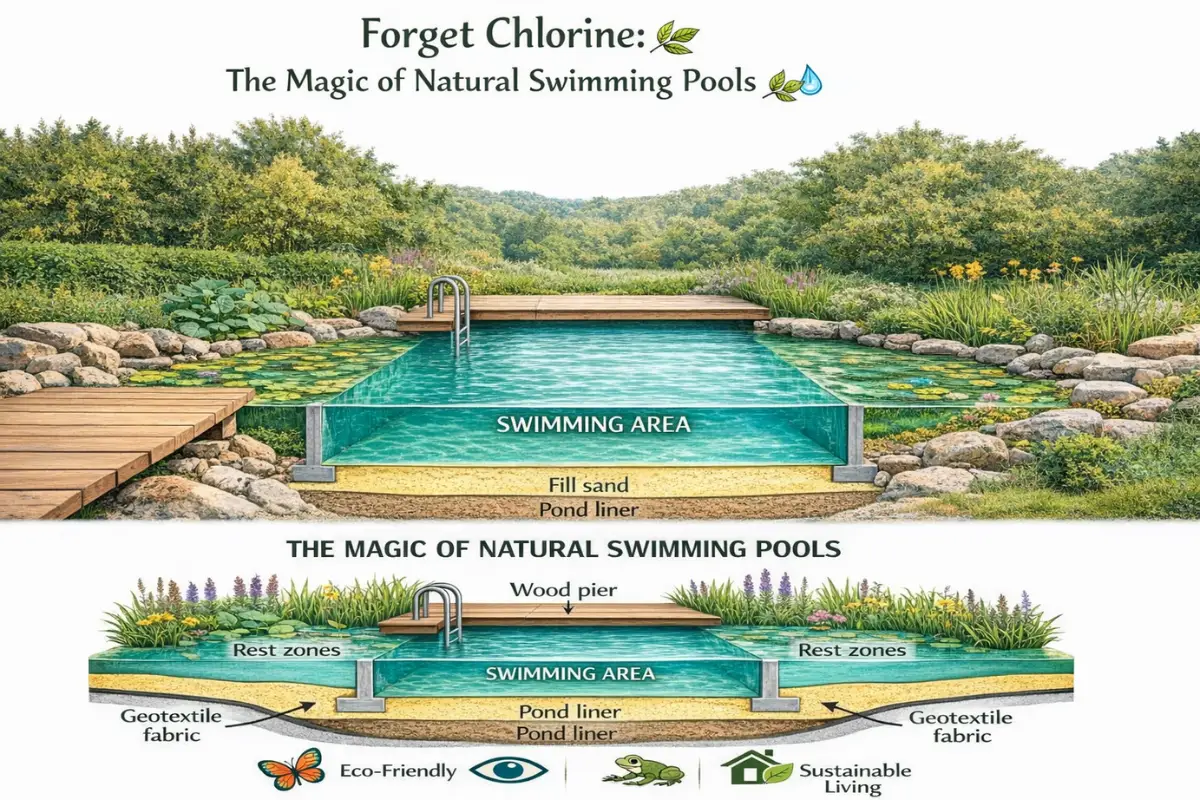
Unlike traditional pools, natural swimming pools are divided into zones. One zone is designed for swimming, while another is dedicated to water regeneration. The regeneration area contains aquatic plants, gravel, sand, and beneficial bacteria that continuously purify the water.
The result is water that is clear, odor-free, and gentle on skin and eyes.
How Natural Swimming Pools Work
The magic behind natural swimming pools lies in biology and physics rather than chemicals.
The Swimming Area
This is the part that looks and feels like a conventional pool. It can be rectangular, organic, modern, or rustic. The water here remains clean because it constantly circulates through natural filters.
The Regeneration Zone
Also known as rest zones or plant zones, these areas are filled with aquatic plants such as reeds, water lilies, and rushes. Their roots absorb nutrients that would otherwise feed algae.
Filtration Layers
Beneath the water, several layers work together:
- Pond liner to ensure waterproofing
- Geotextile fabric to protect the liner
- Gravel and sand layers to trap particles
- Microorganisms that break down organic matter
This system creates a self-sustaining cycle that keeps water healthy and balanced.
Water Circulation
A low-energy pump gently moves water between zones. Some designs even use gravity-based circulation, further reducing energy consumption.
Why Natural Swimming Pools Are Gaining Popularity
Chemical-Free Swimming
Chlorine and other pool chemicals can irritate skin, eyes, and lungs. Many people experience dry skin, red eyes, and even allergic reactions after swimming in traditional pools.
Natural swimming pools eliminate these issues entirely. The water feels soft, neutral, and refreshing.
Eco-Friendly by Design
Natural pools use significantly fewer resources:
- No chemical runoff into soil or groundwater
- Lower energy consumption
- Supports biodiversity instead of harming it
- Integrates seamlessly into natural landscapes
They align perfectly with sustainable living values.
Wildlife Friendly
Birds, butterflies, frogs, and beneficial insects are often attracted to natural pools. Unlike chlorinated pools, these water systems support life rather than repel it.
Aesthetic Beauty
A natural swimming pool looks more like a landscaped pond or garden feature than a man-made structure. Rocks, plants, wooden decks, and soft edges create a resort-like atmosphere that blends into the environment.
Lower Long-Term Maintenance
While the initial build may cost more than a basic pool, maintenance costs are often lower over time:
- No chemicals to buy
- Fewer repairs from corrosion
- Less frequent water replacement
Once balanced, natural pools largely maintain themselves.
Natural Swimming Pool vs Traditional Pool
Water Quality
Traditional pools rely on chemical disinfection, which kills both harmful and beneficial organisms. Natural pools rely on balance, not sterilization.
Health Impact
Natural pools are gentle on skin, hair, and eyes. They’re ideal for children, seniors, and people with sensitivities.
Environmental Impact
Traditional pools consume chemicals, energy, and water. Natural pools recycle water through biological systems and use far less energy.
Appearance
Natural pools resemble high-end garden ponds rather than industrial basins. They enhance property value and landscape harmony.
Design Styles for Natural Swimming Pools
Natural swimming pools are highly customizable.
Modern Minimalist
Clean lines, dark stone, wooden decks, and geometric shapes create a contemporary look while maintaining natural filtration.
Rustic Garden Style
Stone borders, wild plants, curved shapes, and natural materials blend seamlessly into countryside landscapes.
Luxury Eco-Resort Style
Large swimming zones, underwater lighting, wooden piers, and lush planting give the feel of a private spa retreat.
Small Urban Gardens
Even compact spaces can host a natural swimming pool by optimizing vertical planting and efficient filtration layouts.
Construction Layers Explained
Understanding what’s beneath the water helps appreciate the engineering behind natural pools.
Pond Liner
A durable, flexible membrane that ensures the pool is watertight. Modern liners are UV-resistant and long-lasting.
Geotextile Fabric
This protective layer prevents punctures and separates different materials while allowing water flow.
Sand and Gravel
These layers act as mechanical filters, trapping debris and providing surface area for beneficial bacteria.
Plant Roots and Microbiology
The heart of the system. Roots oxygenate water and microorganisms break down waste naturally.
Plants Used in Natural Swimming Pools
Not all plants are suitable. Carefully selected species are used for filtration and balance.
Common choices include:
- Reeds
- Rushes
- Water lilies
- Iris
- Hornwort
These plants absorb excess nutrients and help keep algae under control.
Maintenance: What to Expect
Natural swimming pools are not maintenance-free, but they are different.
Seasonal Tasks
- Remove fallen leaves
- Trim plants once or twice per year
- Check water circulation
Algae Control
Algae is managed naturally through balance. Proper plant density and circulation prevent outbreaks.
Winter Care
In colder climates, natural pools can remain filled year-round. The ecosystem adapts, and minimal intervention is needed.
Are Natural Swimming Pools Safe?
Yes, when properly designed.
The water is continuously filtered and oxygenated. Many natural pools meet or exceed recreational water quality standards when professionally built.
Because there are no chemicals, accidental ingestion is far less concerning than with traditional pools.
Cost Considerations
Initial Investment
Natural swimming pools can cost similar to or slightly more than conventional pools depending on design complexity.
Long-Term Savings
- No chemical purchases
- Lower energy bills
- Fewer repairs
Over time, many owners find natural pools more economical.
Ideal Climate and Location
Natural swimming pools work in a wide range of climates, from Mediterranean regions to temperate zones.
Key factors include:
- Sun exposure
- Soil type
- Space for regeneration zones
Professional design ensures success in almost any environment.
Who Should Choose a Natural Swimming Pool?
Natural swimming pools are ideal for:
- Eco-conscious homeowners
- Families with children
- People with sensitive skin or allergies
- Garden and landscape enthusiasts
- Anyone seeking a chemical-free lifestyle
They’re not just pools, they’re living systems.
Common Myths About Natural Swimming Pools
“They Look Like Swamps”
Modern designs are crystal-clear and visually stunning when properly built.
“They’re Hard to Maintain”
Maintenance is different, not harder. Many owners find it simpler and more enjoyable.
“They Attract Mosquitoes”
Moving water and balanced ecosystems discourage mosquitoes more effectively than stagnant pools.
The Future of Swimming Pools
As sustainability becomes a priority, natural swimming pools are likely to become the standard rather than the exception. They align with green architecture, permaculture design, and wellness-focused living.
They’re not just pools, they’re ecosystems that give back to the environment.
Final Thoughts
Natural swimming pools represent a powerful combination of beauty, health, and sustainability. They offer a swimming experience that feels natural, refreshing, and deeply connected to the environment.
By replacing chemicals with plants, concrete with stone, and sterility with balance, natural swimming pools transform outdoor living spaces into thriving ecosystems.
If you’re looking for a healthier, more sustainable, and visually stunning alternative to traditional pools, natural swimming pools truly are magic.
0 Comment