
 admin
admin Multi-Level Family House Design: Smart Living Spaces for Parents, Kids and Guests
Multi-Level Family House Design: Smart Living Spaces for Parents, Kids and Guests
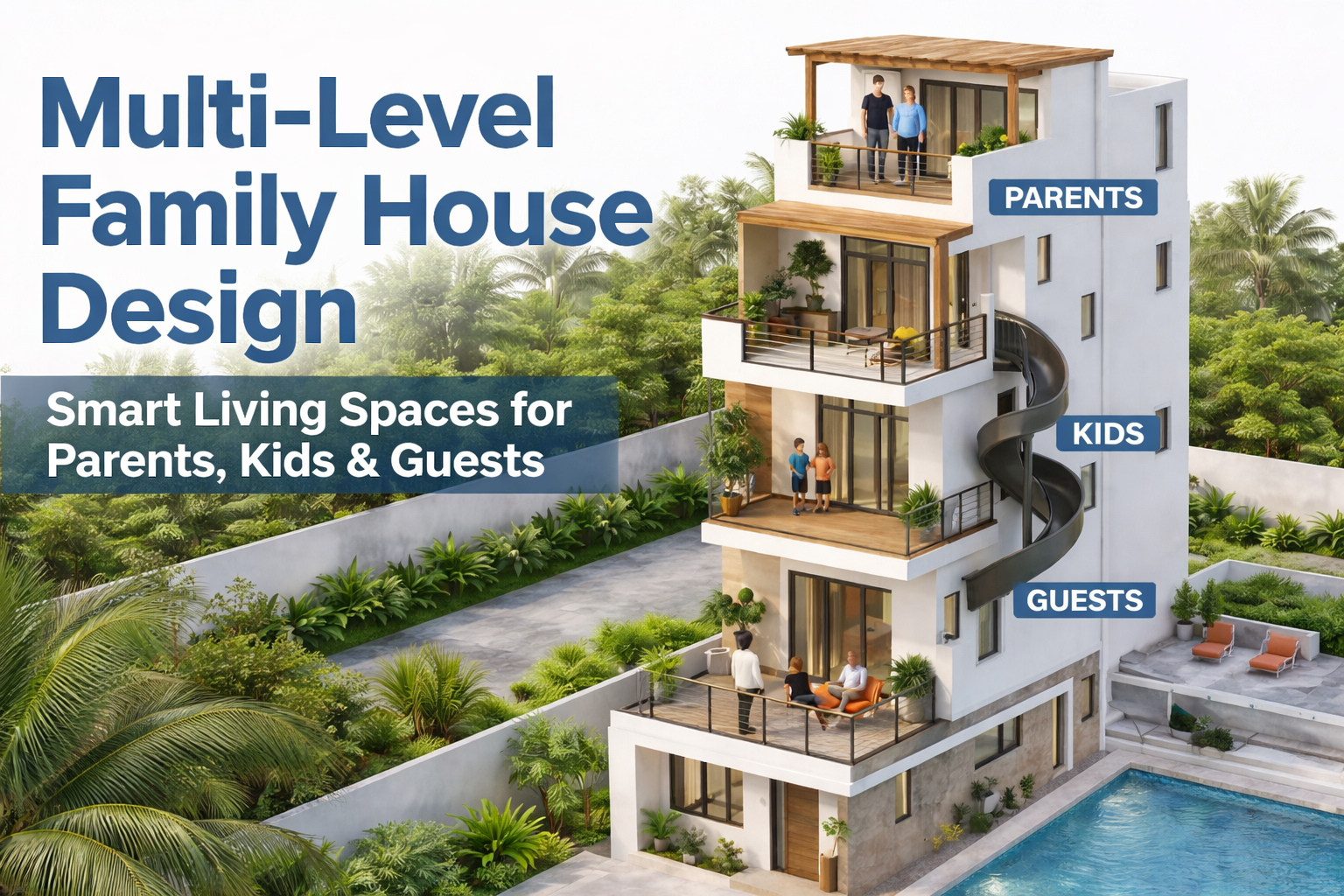
Modern families often need flexible living spaces that balance privacy, comfort, and togetherness. A multi-level house design like the one shown in this concept offers a practical solution by dividing the home into dedicated zones for parents, children, and guests. This vertical home layout maximizes space while maintaining independence for each family member.
This type of architectural concept is becoming increasingly popular in urban areas and among multi-generational families because it combines efficient land use with modern comfort.
A Modern Vertical Living Concept
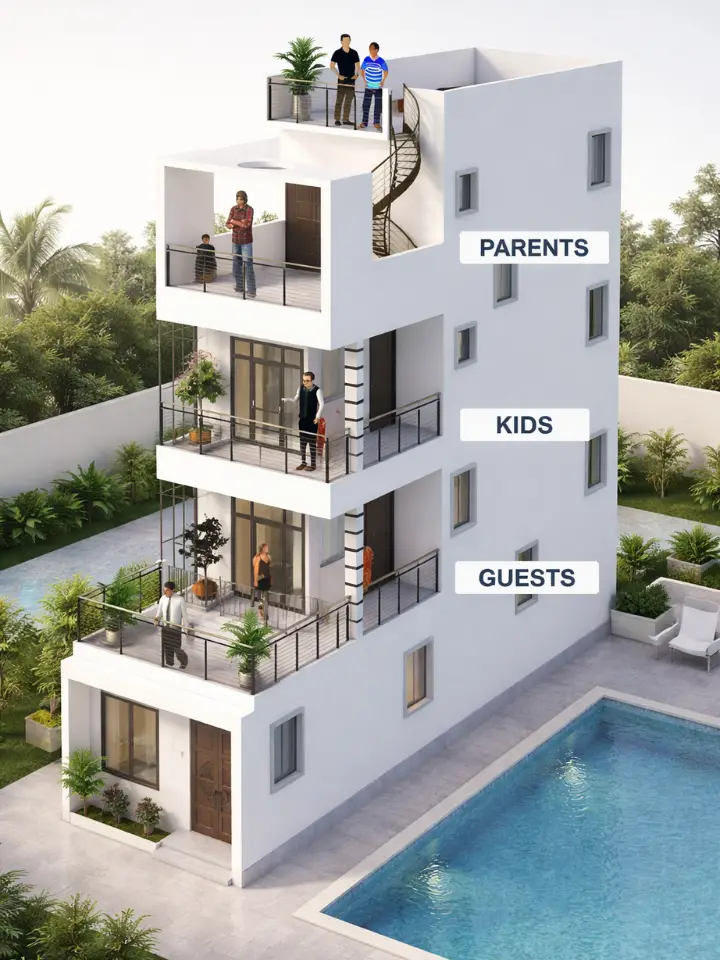
A multi-story family house allows different generations to live under one roof without sacrificing personal space. Each level serves a specific purpose:
- Top floor: parents’ private retreat
- Middle floor: children’s living space
- Lower floor: guest or extended family area
- Ground level: shared living areas
This organization creates a natural balance between shared living and private zones.
Such homes are ideal for:
- Multi-generational families
- Growing families
- Families hosting relatives frequently
- Limited land areas
- Urban environments
Dimensions to Plan Before You Build
Even if the exact measurements depend on your plot, local rules, and your architect’s choices, this type of multi-level family house usually follows a few practical dimension ranges that keep the layout comfortable and realistic.
A good starting point is the footprint: many designs like this work well with a base of about 7–10 m wide and 10–14 m deep (around 70–140 m² per floor). If you build 3–4 levels, the total interior area often lands between 220 and 420 m², which is enough to create truly separate zones for parents, kids, and guests without feeling cramped.
For ceiling height, aim for 2.6–3.0 m to keep rooms bright and airy. Balconies are most usable when they are at least 1.5–2.5 m deep, so you can place a small table, chairs, and plants without blocking circulation. If you include a pool like the one shown, common residential sizes are around 3×6 m, 3×7 m, or 4×8 m, depending on outdoor space and budget.
Finally, plan vertical circulation early: stairs typically need about 0.9–1.1 m clear width for comfort, and if you include a slide feature, you must reserve a safe landing zone and respect safety distances, guardrails, and local building codes.
If you want, tell me your plot size (width × depth) and how many floors you want, and I’ll propose a clean dimension plan (per floor) that fits.
Floor-by-Floor Layout Explanation
Parents Floor – A Private Sanctuary
The top level is designed as a peaceful retreat for parents. Elevated living provides more privacy and often better views.
Typical features include:
- Master bedroom
- Private bathroom
- Walk-in closet
- Quiet workspace
- Private terrace or balcony
Being separated from the children’s floor reduces noise and creates a calm environment for rest.
Benefits include:
- Increased privacy
- Quiet sleeping area
- Dedicated relaxation zone
- Scenic outdoor space
Kids Floor – A Safe and Fun Environment
The middle level is ideal for children because it remains close to the parents while still allowing independence.
Typical features:
- Bedrooms for children
- Shared bathroom
- Study area
- Play space
- Balcony for fresh air
This arrangement helps parents supervise children easily while encouraging independence.
Advantages include:
- Safe distance from stairs
- Organized sleeping areas
- Dedicated learning space
- Easy monitoring
Guest Floor – Comfortable and Independent
The lower floor is reserved for guests or extended family members.
Features may include:
- Guest bedroom
- Private bathroom
- Small living area
- Direct outdoor access
- Terrace
This level gives visitors privacy without disrupting the daily routine of the main household.
Benefits include:
- Comfortable guest stays
- Independence for visitors
- Ideal for elderly parents
- Potential rental income
Shared Living Areas
The ground floor often serves as the main communal space.
Typical elements include:
- Living room
- Kitchen
- Dining area
- Laundry space
- Storage rooms
- Outdoor terrace
This design encourages family interaction while keeping private floors separate.
The Outdoor Features
The house design includes several outdoor elements that enhance lifestyle quality.
Balconies and Terraces
Each level includes a balcony or terrace that provides:
- Natural light
- Fresh air
- Relaxation areas
- Garden views
Outdoor spaces improve mental well-being and increase home value.
Swimming Pool Area
The pool area creates a relaxing environment and turns the home into a private retreat.
Advantages:
- Family recreation
- Exercise opportunities
- Social gatherings
- Increased property appeal
Innovative Design Element: Spiral Slide
One of the most unique features is the exterior spiral slide connecting the children’s floor with the lower level.
Benefits include:
- Fun activity for children
- Quick movement between floors
- Unique architectural feature
- Family-friendly design
Creative features like this make the house memorable and enjoyable for daily living.
Advantages of Multi-Level Family Homes
Efficient Use of Land
Vertical building allows families to live comfortably on smaller plots.
Benefits:
- Ideal for urban areas
- Reduced land costs
- Compact footprint
- More outdoor space
Privacy for Every Family Member
Each floor functions as a semi-independent apartment.
Advantages:
- Less noise
- Personal comfort
- Separate routines
- Better organization
Future Flexibility
This type of house adapts easily to changing needs.
Possible uses:
- Home office floor
- Rental unit
- Elderly parent accommodation
- Teenager apartment
Energy Efficiency Potential
Modern multi-level homes can include:
- Solar panels
- Natural ventilation
- Energy-efficient windows
- Insulated walls
These features reduce long-term costs.
Ideal Dimensions and Planning Tips
When planning a similar house, consider:
Recommended Size
- Plot size: 250–500 m²
- Floor area: 60–100 m² per level
- Total area: 240–400 m²
Important Planning Factors
- Structural stability
Multi-story houses require strong foundations. - Stair design
Stairs must be safe and comfortable. - Natural lighting
Large windows improve comfort. - Sound insulation
Helps maintain privacy. - Safety features
Railings and child-safe designs are essential.
Who This House Design Is Perfect For
This layout works especially well for:
- Families with multiple children
- Parents living with grandparents
- Families hosting visitors often
- People working from home
- Vacation homes
It also works well as a long-term investment property.
Cost Considerations
Costs vary depending on materials and location.
Typical cost ranges:
- Basic construction: medium budget
- Luxury finishes: higher budget
- Outdoor features: additional cost
Important cost factors:
- Number of floors
- Structural materials
- Balconies
- Pool installation
- Interior finishes
Tips for Building a Similar Home
Choose durable materials such as concrete and steel for structural strength.
Design wide balconies for comfortable outdoor use.
Install large glass doors to maximize light.
Plan plumbing vertically to reduce costs.
Add storage areas on each level.
Use neutral exterior colors for a timeless look.
Common Mistakes to Avoid
Ignoring sound insulation between floors can create noise problems.
Poor stair placement can waste space.
Small balconies reduce usability.
Insufficient lighting makes interiors feel narrow.
Poor ventilation increases humidity.
Investment Value
Multi-level family homes often maintain strong resale value because they offer flexible living arrangements.
Advantages include:
- High demand
- Rental potential
- Long-term usability
- Modern appearance
These homes attract both families and investors.
Conclusion
A multi-level family house with dedicated floors for parents, kids, and guests offers a smart and flexible living solution. This type of design combines privacy, comfort, and modern style while making efficient use of available land.
With thoughtful planning, such a home can serve families for decades while adapting to changing needs. The combination of private floors, shared spaces, balconies, and outdoor features creates a balanced lifestyle that supports both independence and family connection.
This type of vertical family home represents a practical and modern approach to comfortable living.
0 Comment