
 admin
admin Japanese Pickled Daikon: The Complete Guide to This Sweet, Crunchy, and Refreshing Classic
Japanese Pickled Daikon:
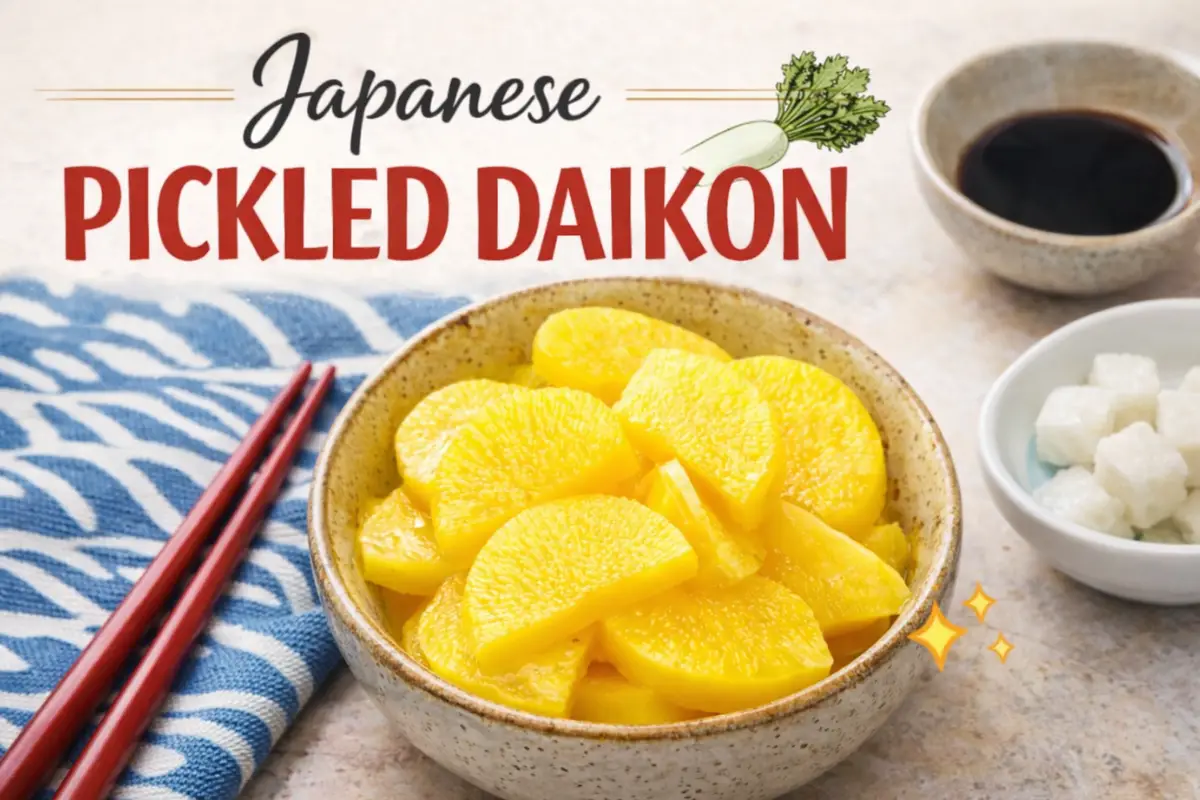
Japanese pickled daikon is one of the most iconic and beloved side dishes in Japanese cuisine. Recognizable by its bright yellow color, crisp texture, and perfectly balanced sweet-and-tangy flavor, it appears on dinner tables, bento boxes, and restaurant menus across Japan. Simple in ingredients yet rich in tradition, this humble pickle has stood the test of time as both a culinary staple and a digestive aid.
In this complete guide, you’ll discover what Japanese pickled daikon is, why it’s so popular, how it’s traditionally prepared, its nutritional benefits, and how you can easily make it at home. Whether you’re a food lover, a home cook, or someone interested in Japanese culture, this article will give you everything you need to know about Japanese pickled daikon.
What Is Japanese Pickled Daikon?
Japanese pickled daikon refers to daikon radish that has been preserved using vinegar, salt, and sugar, resulting in a crisp pickle with a refreshing taste. In Japan, daikon is one of the most widely consumed vegetables, and pickling it allows people to enjoy it year-round.
The most common type seen in modern kitchens is lightly pickled daikon, often called amazuzuke, meaning “sweet vinegar pickle.” Unlike fermented pickles, this version is quick to prepare and ready to eat within one to two days. Its mild acidity and sweetness make it accessible even to those who are new to Japanese pickles.
Japanese pickled daikon is often served as a side dish, palate cleanser, or garnish, complementing rich or savory meals with its clean, crunchy bite.
The Cultural Importance
Pickling has been an essential preservation method in Japan for centuries, long before refrigeration existed. Vegetables like daikon were salted, fermented, or soaked in vinegar to extend their shelf life during winter months.
Japanese pickled daikon became especially popular because daikon radish grows well in Japan’s climate and stores easily. Over time, families developed their own pickling methods, passing recipes down through generations.
Today, Japanese pickled daikon is still deeply rooted in daily life. It appears in traditional breakfasts, accompanies rice and miso soup, and is commonly included in bento boxes. Its bright color and crisp texture also add visual appeal to meals, which is an important aspect of Japanese food culture.
Flavor Profile: Why it Is So Popular
One of the main reasons Japanese pickled daikon is so loved is its unique flavor balance. It combines sweetness, gentle acidity, and a refreshing crunch that enhances almost any dish.
Unlike strongly fermented pickles, Japanese pickled daikon has a clean and mild taste. The sugar softens the sharpness of the vinegar, while the daikon itself absorbs the seasoning without losing its crisp texture. This makes it suitable for all ages and easy to pair with many foods.
The flavor is often described as light, fresh, and slightly tangy, making it perfect for cleansing the palate between bites of richer dishes.
Traditional Ingredients Used in Japanese Pickled Daikon
One of the reasons Japanese pickled daikon is so accessible is its short ingredient list. Traditional recipes rely on just a few pantry staples.
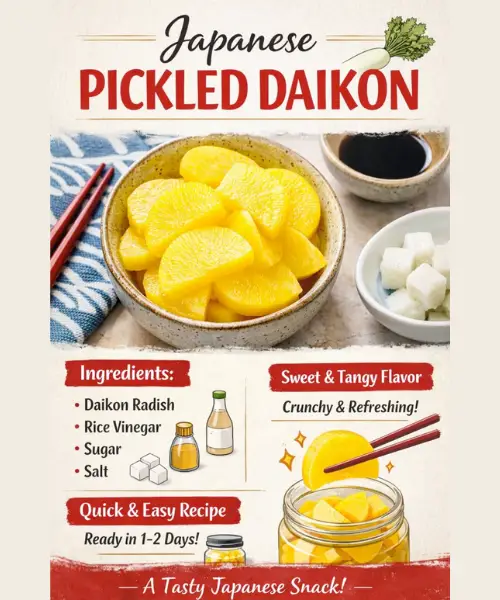
Daikon radish is the star ingredient. Fresh, firm daikon produces the best texture and flavor. Rice vinegar is typically used for its mild acidity and subtle sweetness. Sugar balances the vinegar and creates the characteristic sweet-and-tangy taste. Salt enhances flavor and helps draw moisture from the daikon.
Some variations include turmeric or gardenia fruit to achieve the signature yellow color, though many modern versions rely on the natural color of the ingredients.
How Japanese Pickled Daikon Is Made
The process of making Japanese pickled daikon is straightforward and beginner-friendly. The daikon is peeled and sliced into rounds, half-moons, or chunks. It is then lightly salted and allowed to rest, which helps remove excess moisture and intensify the crunch.
Afterward, the daikon is combined with a mixture of rice vinegar, sugar, and sometimes additional seasoning. The mixture is stored in a clean container and refrigerated for one to two days. During this time, the flavors meld, and the daikon absorbs the sweet and tangy marinade.
Unlike fermented pickles, Japanese pickled daikon does not require weeks of aging, making it ideal for quick preparation.
How to Make Japanese Pickled Daikon at Home
Japanese pickled daikon is easy to prepare and requires no special equipment.
Ingredients
-
1 medium daikon radish (700–900 g)
-
½ cup rice vinegar
-
⅓ cup granulated sugar
-
1 teaspoon salt
Optional:
-
A pinch of turmeric for color
-
Lemon or yuzu peel
-
Thin slices of fresh ginger
Step-by-Step Instructions
Step 1: Peel and slice the daikon into even rounds or half-moons about 5–7 mm thick.
Step 2: Place the slices in a bowl, sprinkle with salt, mix gently, and let rest for 20–30 minutes.
Step 3: Gently squeeze the daikon to remove excess water. Do not rinse.
Step 4: Heat rice vinegar and sugar over low heat until the sugar dissolves. Do not boil. Let cool.
Step 5: Place daikon in a clean container, pour over the cooled liquid, and add optional flavorings.
Step 6: Seal and refrigerate for at least 12 hours, ideally 24–48 hours.
Nutritional Benefits of Japanese Pickled Daikon
Japanese pickled daikon is not only flavorful but also offers several nutritional benefits. Daikon radish is naturally low in calories and high in water content, making it a light and refreshing addition to meals.
It contains vitamin C, which supports immune health, and digestive enzymes that can aid digestion. Pickled daikon is often served alongside fried or heavy dishes because it helps balance the meal and supports digestive comfort.
Because it is lightly pickled rather than heavily fermented, Japanese pickled daikon tends to be easier on the stomach while still offering beneficial compounds from the radish itself.
| Nutrient | Amount | Note |
|---|---|---|
| Calories | 35–45 kcal | Low-calorie food |
| Carbohydrates | 8–10 g | Mostly from natural sugars |
| Sugars | 6–8 g | From added sugar |
| Fiber | 1.5–2 g | Supports digestion |
| Fat | 0 g | Fat-free |
| Protein | 0.5–1 g | Minimal |
| Vitamin C | 15–20% DV | Immune support |
| Potassium | Moderate | Hydration balance |
| Sodium | Moderate | Depends on salt level |
Japanese Pickled Daikon and Digestive Health
In Japanese cuisine, pickles are traditionally served not just for flavor but also for their digestive benefits. Japanese pickled daikon is known for its ability to refresh the palate and stimulate digestion.
Daikon radish contains natural enzymes that help break down fats and starches. This is one reason why it is often served with fried foods, grilled meats, or rich dishes. The vinegar in the pickle further supports digestion by encouraging the production of digestive juices.
As part of a balanced diet, Japanese pickled daikon can contribute to overall digestive comfort and meal satisfaction.
How Japanese Pickled Daikon Is Served
it is incredibly versatile and can be served in many ways. It is commonly presented as a small side dish alongside rice and main courses. In bento boxes, it adds color, texture, and flavor contrast.
It is also used as a garnish for sushi, rice bowls, and noodle dishes. Some people enjoy it as a light snack on its own, especially during warmer months when its refreshing taste is particularly appealing.
In modern cuisine, Japanese pickled daikon has found its way into salads, sandwiches, and fusion dishes, proving its adaptability beyond traditional Japanese meals.
Variations
While the classic sweet-and-tangy version is the most popular, there are several variations of Japanese pickled daikon. Some recipes reduce the sugar for a more savory profile, while others add chili for gentle heat.
In certain regions, daikon is pickled with kombu (seaweed) to add umami depth. Other versions include citrus zest or ginger for aromatic complexity. Despite these variations, the essence of Japanese pickled daikon remains the same: a crisp, refreshing pickle that complements the meal.
Japanese Pickled Daikon vs Other Japanese Pickles
Japanese cuisine features many types of pickles, collectively known as tsukemono. Japanese pickled daikon differs from fermented pickles like takuan or nukazuke in both preparation and flavor.
While fermented pickles develop deep, complex flavors over time, Japanese pickled daikon made with vinegar is lighter and quicker to prepare. This makes it ideal for everyday meals and for those who prefer a mild taste.
Its accessibility and simplicity have helped Japanese pickled daikon remain popular even as food trends change.
Making Japanese Pickled Daikon at Home
One of the greatest advantages of Japanese pickled daikon is how easy it is to make at home. With just a daikon radish, rice vinegar, sugar, and salt, anyone can recreate this classic dish in their own kitchen.
Homemade version allows you to control sweetness and acidity to suit your taste. It also ensures freshness and avoids preservatives found in some store-bought versions.
Once prepared, it can be stored in the refrigerator and enjoyed over several days, making it a convenient addition to meal planning.
Tips for Perfection
To achieve the best results, choose a fresh daikon that feels heavy for its size and has smooth, unblemished skin. Slice evenly to ensure consistent texture and flavor absorption.
Allowing the daikon to rest with salt before pickling improves crunch and prevents excess water from diluting the marinade. Using rice vinegar rather than stronger vinegars preserves the delicate balance that defines Japanese pickled daikon.
Patience also matters. While it can be eaten within hours, waiting one to two days allows the flavors to fully develop.
Storage and Shelf Life
it should be stored in an airtight container in the refrigerator. When kept cold and clean, it typically lasts up to one week without losing quality.
Over time, the flavor may become slightly more pronounced as the daikon continues to absorb the marinade. For best texture and freshness, it is recommended to consume it within the first few days.
Always use clean utensils when serving to prevent contamination and extend shelf life.
Japanese Pickled Daikon in Modern Cooking
As global interest in Japanese cuisine grows, Japanese pickled daikon has gained popularity outside Japan. It is now featured in fusion dishes, modern plating, and health-focused menus.
Chefs appreciate its ability to add brightness and crunch without overpowering other flavors. Home cooks enjoy its simplicity and versatility. Its presence in international kitchens highlights how traditional foods can adapt to modern lifestyles while retaining their cultural roots.
Why Japanese Pickled Daikon Deserves a Place in Your Kitchen
it is more than just a side dish. It represents balance, simplicity, and respect for ingredients, values that are central to Japanese cooking.
Its sweet-and-tangy flavor enhances meals, its crunch adds texture, and its lightness makes it suitable for everyday eating. Easy to prepare, affordable, and versatile, it fits seamlessly into both traditional and modern diets.
Whether you’re exploring Japanese cuisine for the first time or looking to expand your pickling repertoire, Japanese pickled daikon is an excellent place to start.
Conclusion
Japanese pickled daikon stands as a perfect example of how simple ingredients can create something truly memorable. With its refreshing crunch, balanced sweetness, and cultural significance, it continues to be a favorite across generations.
From its historical roots in Japanese preservation techniques to its modern presence in kitchens around the world, Japanese pickled daikon remains timeless. Easy to make, pleasant to eat, and beneficial for digestion, it is a dish that proves less is often more.
By adding Japanese pickled daikon to your meals, you’re not just enjoying a tasty pickle, you’re embracing a small but meaningful piece of Japanese culinary tradition.
“People Also Ask” FAQ
What does Japanese pickled daikon taste like?
Japanese pickled daikon tastes sweet, lightly tangy, crisp, and refreshing.
How is Japanese pickled daikon different from kimchi?
Japanese pickled daikon is vinegar-based and mild, while kimchi is fermented, spicy, and strong.
Can Japanese pickled daikon be frozen?
Freezing is not recommended because it destroys the crisp texture.
Why is Japanese pickled daikon yellow?
Some recipes use turmeric or gardenia fruit for color, while others develop a natural yellow tone over time.
Can I use apple cider vinegar instead of rice vinegar?
It is possible, but rice vinegar gives the most authentic flavor.
0 Comment