
 admin
admin How to Make Pickled Radish and Vegetables (Easy, Crunchy & Flavor-Packed)
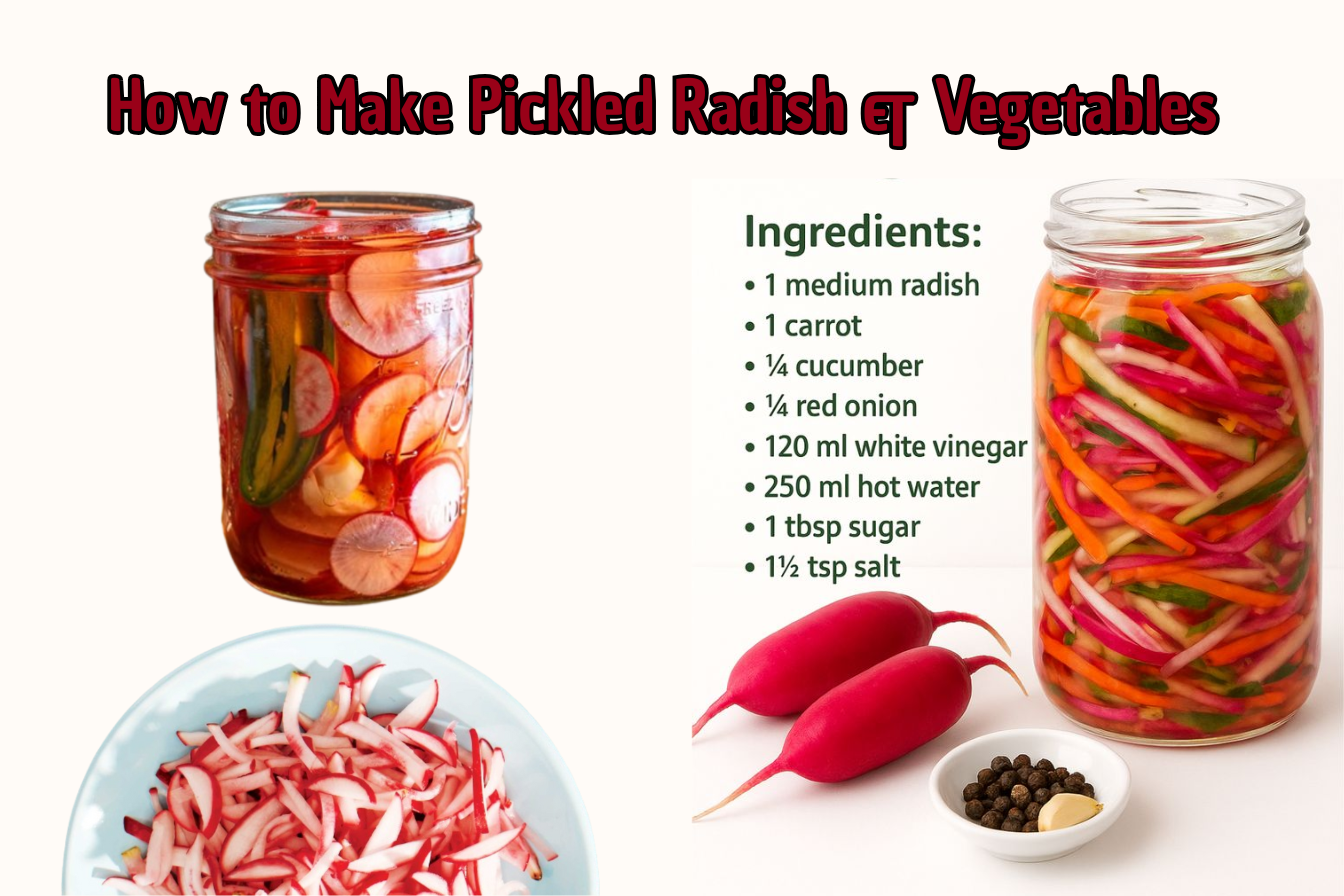
How to Make Pickled Radish and Vegetables
Pickled radish and vegetables are one of the easiest ways to add color, crunch, and bold flavor to your meals. Whether you spoon them onto sandwiches, serve them alongside grilled meats, or use them to brighten grain bowls and salads, this quick pickle recipe delivers maximum taste with minimal effort.
In this complete SEO-friendly guide, you’ll learn how to make pickled radish and vegetables at home, why they’re so popular, how to customize the flavor, storage tips, and common mistakes to avoid.
Why Pickled Radish and Vegetables Are So Popular
Quick-pickled vegetables have become a kitchen staple because they are:
- Fast to prepare (no canning required)
- Naturally crunchy and refreshing
- Budget-friendly
- Customizable to many cuisines
- A healthy way to preserve vegetables
Radishes, in particular, transform beautifully when pickled. Their sharp bite mellows into a slightly sweet, tangy crunch while keeping their vibrant pink color.
What Are Quick Pickles?
Quick pickles (also called refrigerator pickles) are vegetables soaked in a hot vinegar brine and stored in the fridge. Unlike traditional fermented pickles, they:
- Do not require weeks of fermentation
- Are ready in just a few hours
- Have a clean, bright vinegar flavor
This method is perfect if you want instant results with consistent flavor.
Ingredients for Pickled Radish and Vegetables
This recipe creates a balanced mix of sweet, salty, and tangy flavors.
Vegetables
- 1 medium radish, julienned
- 1 carrot, julienned
- ¼ cucumber, thinly sliced
- ¼ red onion, thinly sliced
Pickling Brine
- 120 ml white vinegar
- 250 ml hot water
- 1 tablespoon sugar
- 1½ teaspoons salt
Optional Flavor Boosters
- Garlic clove
- Whole peppercorns
- Chili flakes
- Mustard seeds
- Fresh dill or cilantro
How to Make Pickled Radish and Vegetables (Step-by-Step)
Step 1: Prepare the Vegetables
Wash all vegetables thoroughly. Slice them into thin, uniform strips or rounds. This ensures even pickling and a pleasant crunch.
Step 2: Pack the Jar
Place the sliced radish, carrot, cucumber, and red onion into a clean glass jar. Pack them tightly but without crushing.
Step 3: Make the Pickling Brine
In a bowl or measuring jug, combine the hot water, vinegar, sugar, and salt. Stir until the sugar and salt fully dissolve.
Step 4: Pour & Submerge
Pour the hot brine over the vegetables, making sure everything is fully submerged. Tap the jar gently to release air bubbles.
Step 5: Cool & Refrigerate
Let the jar cool to room temperature, then seal it and place it in the refrigerator.
Step 6: Wait (Just a Little)
Your pickled vegetables will be lightly pickled in 30–60 minutes, but the flavor improves after 12–24 hours.
How Long Do Pickled Radish and Vegetables Last?
Stored in an airtight container in the refrigerator, these quick pickles last:
- Up to 2 weeks for best flavor and crunch
- Safe beyond that if kept cold, but texture may soften
Always use clean utensils when serving to extend shelf life.
Flavor Variations You Can Try for Pickled Radish and Vegetables
One of the best things about pickled vegetables is how easy they are to customize.
Spicy Pickled Radish
Add sliced chili peppers or red pepper flakes for heat.
Asian-Inspired Pickles
Use rice vinegar and add ginger slices and sesame seeds.
Sweet & Mild Version
Increase sugar slightly and reduce vinegar for a gentler flavor.
Garlic Lover’s Pickles
Add crushed garlic cloves directly into the jar.
Best Ways to Use Pickled Radish and Vegetables
These quick pickles are incredibly versatile:
- Tacos and wraps
- Burgers and sandwiches
- Rice bowls and noodle dishes
- Salads for extra crunch
- Charcuterie boards
- Grilled meat or fish sides
They instantly elevate simple meals with acidity and texture.
Health Benefits of Pickled Radish and Vegetables
While quick pickles are not fermented, they still offer benefits:
- Low in calories
- Help balance rich or fatty foods
- Encourage vegetable consumption
- Radishes provide vitamin C and antioxidants
To reduce sodium, slightly lower the salt amount.
Common Mistakes to Avoid while making Pickled Radish and Vegetables
Avoid these issues for perfect pickles every time:
- Cutting vegetables too thick
- Not dissolving sugar and salt fully
- Using warm jars (can cause cloudiness)
- Skipping refrigeration
Frequently Asked Questions
Can I use apple cider vinegar instead?
Yes, apple cider vinegar adds a slightly fruity flavor and works very well.
Do I need to sterilize the jar?
For refrigerator pickles, a clean jar washed with hot soapy water is enough.
Why did my pickles turn cloudy?
Cloudiness usually comes from undissolved salt or spices. It’s harmless.
Can I reuse the brine?
It’s best to make fresh brine for food safety and flavor balance.
Final Thoughts about Pickled Radish and Vegetables
Making pickled radish and vegetables at home is simple, fast, and incredibly rewarding. With just a handful of ingredients, you can create a vibrant, crunchy topping that enhances countless dishes.
Once you try this method, you’ll never look at plain vegetables the same way again
0 Comment