
 admin
admin How to Clean Your Washing Machine So Your Laundry Smells Fresh Again
How to Clean Your Washing Machine So Your Laundry Smells Fresh Again
If your clothes come out of the washing machine smelling less than clean, the problem may not be your detergent or fabric softener. In many cases, the real issue is the washing machine itself. Over time, detergent residue, moisture, bacteria, and mold can build up inside the machine, creating unpleasant odors that transfer directly onto your laundry.
Cleaning your washing machine regularly is one of the most overlooked but important steps in maintaining fresh-smelling clothes. A clean machine not only improves laundry results but also extends the life of the appliance, reduces energy use, and prevents costly repairs.
This guide explains why washing machines develop odors, how to clean every critical part properly, and how to keep your machine fresh long-term.
Why Washing Machines Start to Smell
Washing machines are designed to clean, yet they operate in a warm, damp environment that can easily trap residue. Several factors contribute to odor buildup.
One major cause is excess detergent. Modern detergents are highly concentrated, and using more than necessary leaves behind sticky residue. This residue coats the drum, hoses, and seals, creating a breeding ground for bacteria.
Another issue is frequent use of cold water cycles. While energy-efficient, cold washes do not break down oils and biofilm as effectively as hot water. Over time, these layers accumulate.
Moisture retention also plays a key role. Closing the door immediately after a wash traps humidity inside the machine, encouraging mold and mildew growth, especially around rubber seals and hidden crevices.
Signs Your Washing Machine Needs Cleaning
Many people do not realize their washing machine is dirty until the smell becomes obvious. Common warning signs include:
- A musty or sour odor inside the drum
- Clothes smelling unpleasant even after washing
- Visible black or gray residue on rubber seals
- Slime buildup in the detergent drawer
- Excess suds or poor rinsing
If you notice any of these issues, it is time for a deep clean.
How Often You Should Clean Your Washing Machine
For most households, a basic cleaning once a month is sufficient. Homes with frequent laundry loads, hard water, or pet bedding may need more frequent maintenance.
High-efficiency washers, especially front-load models, benefit from consistent cleaning because they use less water and rely on tight seals that trap moisture.
Regular maintenance prevents odors before they start and reduces the need for aggressive cleaning later.
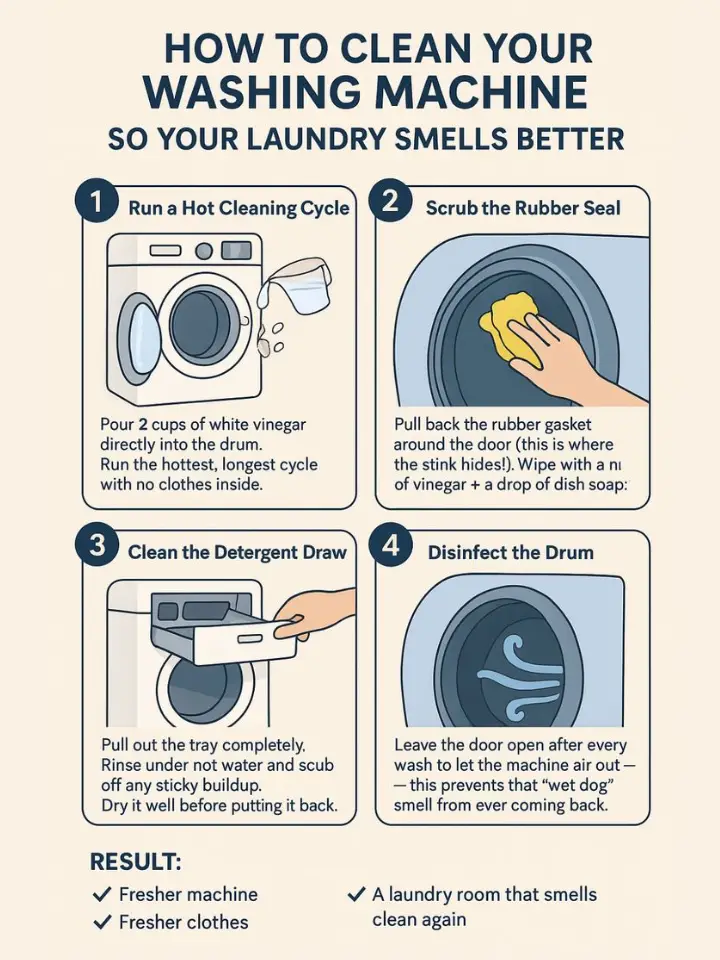
Step 1: Run a Hot Cleaning Cycle
The first and most important step in cleaning a washing machine is a hot cleaning cycle. Heat helps dissolve detergent residue, kill bacteria, and loosen buildup inside the drum and internal components.
Use the hottest and longest cycle available on your machine. Make sure the washer is completely empty.
Instead of commercial cleaners, many people prefer natural options such as white vinegar. Vinegar helps dissolve mineral deposits and neutralize odors without damaging the machine when used correctly.
Pour the cleaning solution directly into the drum rather than the detergent drawer. This allows it to circulate freely throughout the interior.
Once the cycle finishes, you may already notice a significant improvement in smell.
Step 2: Clean the Rubber Door Seal Thoroughly
The rubber seal around the door is one of the most common sources of washing machine odors. Water, lint, hair, and detergent residue easily collect here, often out of sight.
Gently pull back the rubber gasket and inspect the folds. You may find residue, mold spots, or trapped debris.
Use a soft cloth or sponge dampened with warm water and a mild cleaning solution. Wipe every fold carefully, paying close attention to corners where buildup hides.
After cleaning, dry the seal completely with a towel. Leaving it wet allows bacteria to return quickly.
Step 3: Remove and Clean the Detergent Drawer
The detergent drawer often harbors hidden grime. Liquid detergent and fabric softener are especially prone to leaving sticky residue that encourages mold growth.
Remove the drawer completely if possible. Rinse it under warm running water and scrub gently with a brush to remove buildup.
Pay attention to small compartments and siphon tubes inside the drawer. These areas frequently clog and trap residue.
Once clean, dry the drawer thoroughly before placing it back in the machine.
Step 4: Disinfect the Drum and Interior
Even after a hot cycle, additional steps can help eliminate lingering bacteria and odors.
Running a second hot cycle with a mild disinfecting solution can be beneficial, especially if odors were strong. Avoid mixing different cleaning agents together, as some combinations can be unsafe.
After this cycle, leave the door open to allow the interior to dry completely. Air circulation is critical to preventing mold regrowth.
The Importance of Letting Your Washing Machine Air Out
One of the simplest yet most effective habits for keeping a washing machine fresh is leaving the door open after each wash.
When the door remains closed, moisture becomes trapped inside the drum, creating ideal conditions for mold and mildew. Allowing airflow helps dry internal surfaces and reduces bacterial growth.
If space allows, leave the door slightly open at all times between washes.
How Detergent Choice Affects Washing Machine Odors
Not all detergents are equal when it comes to machine cleanliness. Highly concentrated formulas require smaller amounts than many people realize.
Using too much detergent does not make clothes cleaner. Instead, it increases residue buildup inside the machine.
Choose detergents labeled for high-efficiency machines if applicable, and measure carefully according to load size and soil level.
Occasionally using a hot wash can also help remove leftover detergent film.
Front-Load vs Top-Load Washing Machines
Front-load washing machines are more prone to odor issues due to their airtight seals and lower water usage. While they are energy efficient, they require more consistent maintenance.
Top-load machines generally have fewer odor problems, but they still benefit from regular cleaning, especially if used with cold water cycles.
Regardless of model type, proper maintenance habits apply to all machines.
Preventing Odors Before They Start
Cleaning your washing machine is important, but prevention is even better. Simple daily habits can keep odors from forming.
Remove laundry promptly after washing to reduce moisture buildup. Leaving wet clothes in the machine encourages bacterial growth.
Avoid excessive use of fabric softener, which leaves a waxy coating inside the drum and hoses.
Wipe the door seal occasionally, especially after washing heavily soiled loads.
Use the appropriate water temperature for different types of laundry to prevent residue accumulation.
How Hard Water Contributes to Washing Machine Smells
Hard water contains high levels of minerals that can combine with detergent residue to form stubborn deposits inside the machine.
These deposits trap bacteria and odors over time. If you live in an area with hard water, more frequent cleaning may be necessary.
Installing a water softener or using appropriate detergent formulations can reduce buildup and improve overall machine performance.
Natural vs Commercial Washing Machine Cleaners
Both natural and commercial cleaners can be effective when used correctly. Natural solutions are popular because they are affordable, accessible, and environmentally friendly.
Commercial washing machine cleaners are formulated to target specific residues and may be useful for severe buildup. However, they should be used according to manufacturer instructions to avoid damage.
Regardless of the method chosen, consistency matters more than the product itself.
Safety Tips When Cleaning Your Washing Machine
Never mix different cleaning agents together, especially vinegar and bleach, as this can create harmful fumes.
Avoid abrasive tools that can damage seals or drum surfaces.
Always follow the manufacturer’s recommendations for cleaning and maintenance.
If odors persist despite repeated cleaning, consult a professional technician to check for internal drainage or mechanical issues.
Benefits of a Clean Washing Machine
Keeping your washing machine clean offers several advantages beyond fresh laundry.
A clean machine:
- Produces better-smelling clothes
- Improves washing efficiency
- Reduces energy consumption
- Extends appliance lifespan
- Prevents mold and bacteria growth
- Saves money on repairs and replacements
Regular maintenance protects both your clothes and your investment.
Common Myths About Washing Machine Cleaning
Some people believe washing machines clean themselves. While water flows through the machine, it does not remove residue buildup automatically.
Another myth is that stronger detergent equals cleaner results. In reality, excess detergent creates more problems than it solves.
Understanding these misconceptions helps improve laundry habits and appliance care.
Final Thoughts
A washing machine plays a central role in maintaining cleanliness in the home, yet it is often neglected. Over time, residue, moisture, and bacteria can build up, leading to unpleasant odors and poor laundry results.
By cleaning your washing machine regularly, paying attention to hidden areas, and adopting simple preventive habits, you can ensure your laundry smells fresh every time. A small amount of effort each month can make a noticeable difference in both performance and hygiene.
A clean washing machine is not just about better-smelling clothes—it is about healthier living, longer appliance life, and a more efficient home.
0 Comment