
 admin
admin Step Back in Time: How Coffee Was Made Long Ago
How Coffee Was Made Long Ago
Coffee today is fast, convenient, and often rushed. With a single button, you can have a cup in seconds. But centuries ago, coffee was never about speed. It was about ritual, patience, craftsmanship, and human connection.
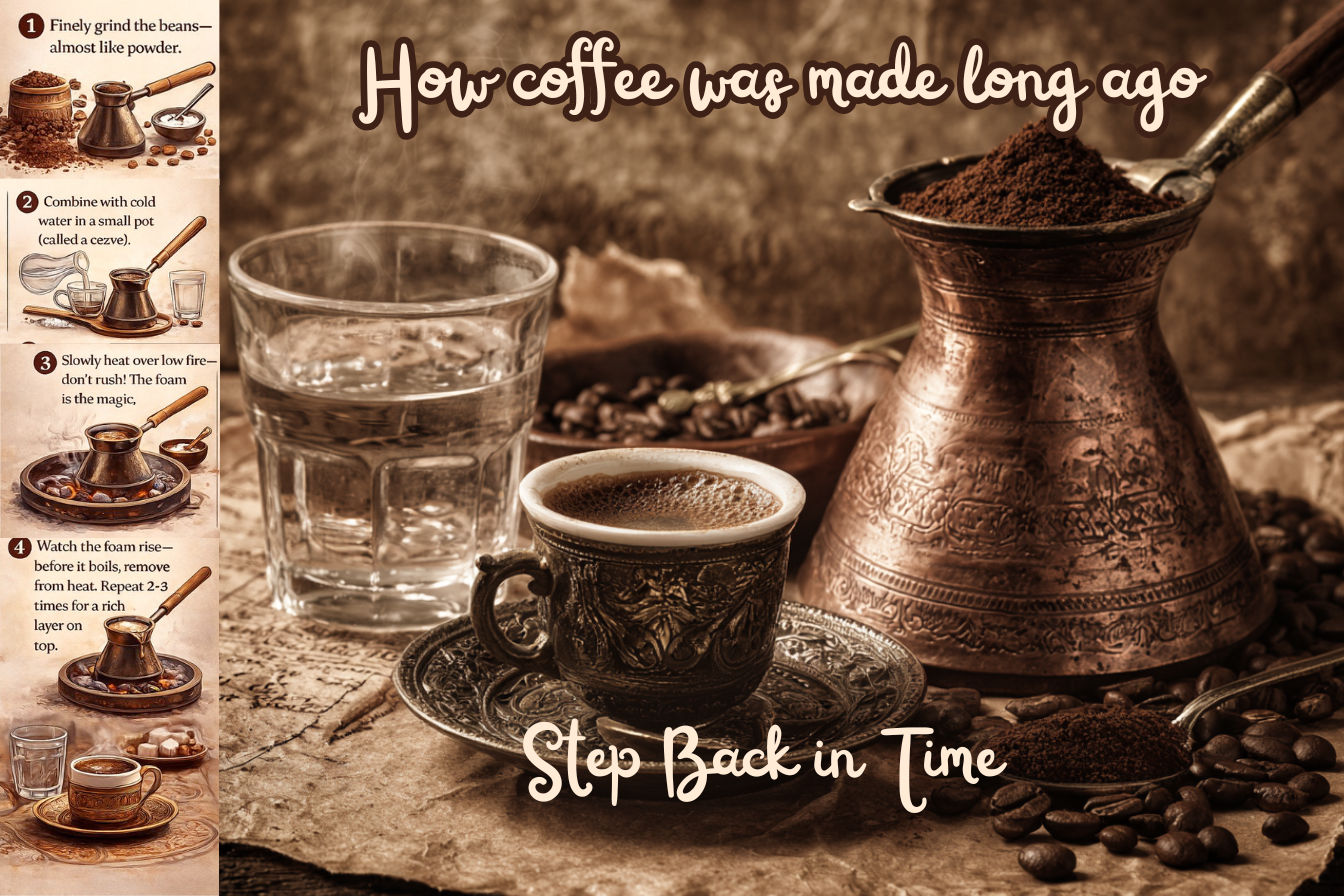
The traditional method shown in the image represents one of the oldest coffee brewing techniques in history, most commonly associated with the Ottoman Empire, the Middle East, and parts of North Africa and Eastern Europe. This ancient process didn’t just produce coffee—it created moments, conversations, and traditions passed down through generations.
In this in-depth guide, you’ll discover how coffee was made long ago, where the tradition began, the tools used, the cultural meaning behind it, and why this ancient brewing method is still relevant today.
The Early History of Coffee
Where Coffee Originally Came From
Coffee’s story begins in Ethiopia, where coffee plants grew wild. According to legend, a goat herder named Kaldi noticed his goats became energetic after eating coffee cherries. While the legend may be symbolic, historical records confirm that coffee traveled from Ethiopia to Yemen by the 15th century.
From Yemen, coffee spread rapidly to:
- The Arabian Peninsula
- The Ottoman Empire
- Persia
- North Africa
- Europe
Coffee quickly became more than a drink—it became a social institution.
Coffee Before Machines: A Way of Life
Before electricity, grinders, or filters, coffee was entirely handcrafted. Every step required attention and skill.
Coffee preparation was often:
- A daily ritual
- A sign of hospitality
- A moment of pause in the day
The slower pace allowed people to appreciate the process as much as the result.
What Is a Cezve and Why It Matters
A cezve (also called an ibrik) is a small pot traditionally used for brewing coffee.
Key Features of a Cezve
- Wide bottom for even heat
- Narrow neck to trap foam
- Pouring lip for control
- Made from copper, brass, silver, or bronze
Copper cezves were especially prized because they conducted heat evenly, preventing scorching.
Why the cezve mattered: Its design allowed coffee to heat slowly and foam naturally—something modern equipment often struggles to replicate.
Step-by-Step: How Coffee Was Made Long Ago
1. Grinding Coffee Beans Into Powder
Coffee beans were ground extremely fine, almost like flour. This was done using:
- Stone mortars
- Hand-crank metal grinders
There was no consistency control—only experience.
Why it mattered: Fine grounds allowed maximum flavor extraction and created the thick texture traditional coffee is known for.
2. Mixing Coffee With Cold Water
Cold water was poured into the cezve first, followed by the coffee grounds. Sugar or spices—such as cardamom—were added at this stage.
The mixture was never stirred after heating began.
Why cold water was essential: It allowed flavors to release slowly and evenly, avoiding bitterness.
3. Heating Slowly Over Low Fire
The cezve was placed over:
- Hot sand
- Embers
- Low open flame
This step required patience. Rushing ruined the coffee.
As the liquid warmed, a thick foam began to rise.
In traditional coffee making, the foam was considered the soul of the drink.
4. Controlling the Foam (The Most Important Step)
Before the coffee reached a boil, it was removed from heat. The foam was sometimes spooned into cups, then the coffee returned to heat.
This process was repeated two to three times.
Why it mattered: The foam signified mastery, care, and respect for the guest.
5. Serving the Coffee Unfiltered
The coffee was poured directly into small cups—grounds included.
Drinkers waited briefly for the grounds to settle, then sipped slowly.
Coffee was never meant to be rushed or gulped.
The Taste of Ancient Coffee
Traditional coffee brewed this way tastes very different from modern coffee.
Flavor Profile
- Bold and intense
- Slightly bitter
- Thick and rich
- Full-bodied with natural oils
It was not diluted with milk or syrups. Every sip was strong and grounding.
Coffee as a Social Ritual
Hospitality and Respect
Serving coffee was a symbol of generosity. In many cultures:
- Guests were always offered coffee
- Refusing coffee was considered rude
- The quality of coffee reflected the host’s honor
Coffeehouses and Community
Early coffeehouses were centers for:
- Storytelling
- Political discussion
- Poetry and music
They were often called schools of wisdom.
Spiritual and Cultural Meaning of Coffee
Coffee wasn’t just physical nourishment—it carried symbolic meaning.
Patience and Presence
The slow brewing process encouraged mindfulness and reflection.
Coffee Fortune Reading
After drinking, cups were turned upside down and grounds were interpreted—a tradition still practiced today.
How Traditional Coffee Differs From Modern Coffee
| Traditional Coffee | Modern Coffee |
|---|---|
| Unfiltered | Filtered or pressurized |
| Slow heating | Instant brewing |
| Hand-ground | Machine-ground |
| Thick texture | Clean, light body |
| Ritual-based | Convenience-based |
Both methods serve different purposes, but the experience is entirely different.
Can You Still Make Coffee This Way Today?
Yes—and many people are returning to this method.
What You Need
- A cezve or small saucepan
- Extra-fine ground coffee (Turkish grind)
- Cold water
- Low heat
The method remains almost unchanged from centuries ago.
Health Aspects of Traditional Coffee
Because it’s unfiltered, traditional coffee contains:
- Natural oils
- Antioxidants
However, it’s stronger than filtered coffee, so moderation is key.
Why Ancient Coffee Methods Are Making a Comeback
In a fast-paced digital world, people crave:
- Slowness
- Authentic experiences
- Meaningful rituals
Traditional coffee offers all three.
What This Ancient Coffee Method Teaches Us Today
This old-fashioned way of brewing coffee reminds you to:
- Slow down
- Be intentional
- Value simple moments
It turns an everyday habit into a mindful ritual.
Final Thoughts: Coffee Beyond the Cup
Long ago, coffee wasn’t automated or rushed. It was prepared with care, shared with intention, and enjoyed fully.
This ancient brewing method proves that some traditions never lose their value.
When you make coffee the old way, you’re not just brewing a drink—you’re continuing a story that began centuries ago.
0 Comment