
 admin
admin Horizontal Chimney Heating System: The Cozy, Energy-Efficient Way to Heat Your Home
Horizontal Chimney Heating System: The Cozy, Energy-Efficient Way to Heat Your Home
In a world where energy costs keep rising and sustainability matters more than ever, homeowners are rediscovering smart heating solutions that work with nature instead of against it. One of the most impressive examples is the Horizontal Chimney Heating System—a design that transforms a simple wood fire into long-lasting, radiant warmth.
This system doesn’t just heat the air. It heats the space, the surfaces, and the people inside the home. The result is a deep, comfortable warmth that feels natural, calm, and incredibly efficient.
If you’ve ever dreamed of a cozy heated bench, warm floors, or a fireplace that keeps giving heat long after the flames are gone, this system deserves your attention.
What Is a Horizontal Chimney Heating System?
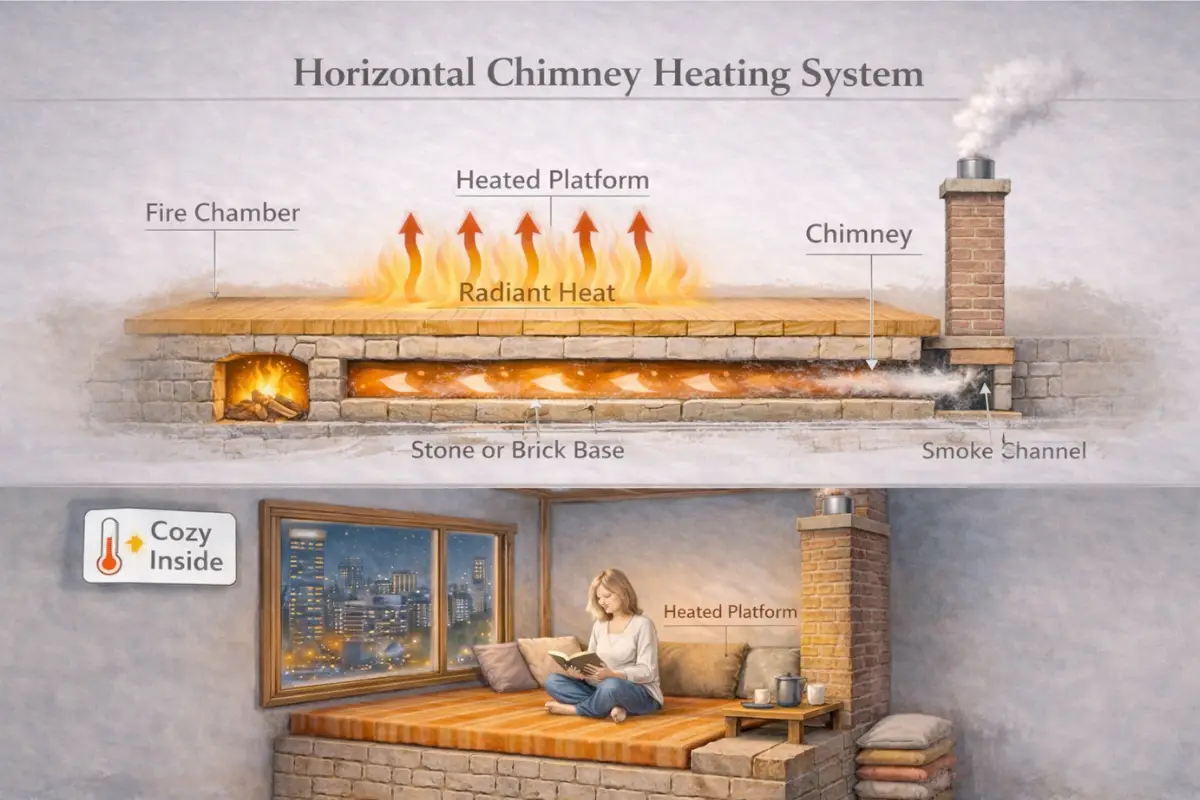
A horizontal chimney heating system is a wood-based heating design that captures heat from smoke before it escapes through the chimney. Unlike traditional fireplaces—where most heat disappears straight up—the horizontal system forces hot gases to travel through a long, low channel made of stone or brick.
As the smoke moves horizontally, heat is absorbed by the surrounding masonry. This stored heat is then slowly released into the room for hours.
In simple terms:
- Fire creates heat
- Stone stores heat
- Your home stays warm longer
This concept has been used for centuries in different cultures, from masonry stoves in Europe to heated platforms in Asia. Modern versions refine the idea for today’s homes.
Why Traditional Fireplaces Waste So Much Heat
To understand why this system is so effective, it helps to look at the problem with standard fireplaces.
The Main Issues with Conventional Fireplaces:
- Heat rises quickly and escapes through the chimney
- Warm air is pulled out of the room
- Fire must be constantly fed
- Uneven heating and cold floors
- High fuel consumption
In many cases, a traditional fireplace can actually cool a house down once the fire dies.
The horizontal chimney system solves this by slowing down the heat loss and capturing energy that would otherwise be wasted.
How the Horizontal Chimney Heating System Works
Let’s break down the process step by step.
1. The Fire Chamber
The fire starts in a compact fire chamber, usually built from firebrick. Because the chamber is small and insulated, the fire burns hotter and cleaner, producing strong heat with less wood.
2. Controlled Airflow
Airflow is carefully managed to keep combustion efficient. This reduces smoke, increases heat output, and lowers emissions.
3. Horizontal Smoke Channel
Instead of rising immediately, the hot gases are forced through a horizontal channel beneath a stone or brick platform. This is the heart of the system.
As smoke travels through this long path:
- Heat transfers into the masonry
- Smoke cools gradually
- Energy is stored instead of lost
4. Thermal Mass Storage
Stone and brick have high thermal mass, meaning they absorb heat slowly and release it slowly. Once heated, they can stay warm for 8 to 24 hours.
5. Chimney Exit
Only after most of the heat has been extracted does the smoke exit through a vertical chimney. At this point, much of the usable heat has already entered your living space.
The Heated Platform: Comfort You Can Feel
One of the most loved features of this system is the heated platform above the smoke channel.
This platform can be used as:
- A heated bench
- A daybed or reading nook
- A sleeping platform
- A cozy family seating area
Instead of blowing hot air, the platform emits radiant heat, which warms your body directly. This type of heat feels softer, deeper, and more comfortable than forced air systems.
It’s the kind of warmth that makes you want to sit down, relax, and stay awhile.
Radiant Heat vs. Forced Air Heating
Radiant Heat (Horizontal Chimney System):
- Warms surfaces and people directly
- No drafts
- Silent operation
- Even temperature distribution
- Feels warmer at lower temperatures
Forced Air Heating:
- Heats air only
- Air cools quickly
- Dust and allergens circulate
- No heat storage
- Requires constant energy
This is why many people say radiant heat feels warmer—even when the thermostat is set lower.
Energy Efficiency and Fuel Savings
One of the biggest advantages of the horizontal chimney heating system is its exceptional efficiency.
Because heat is stored and reused:
- Less wood is required
- Fires don’t need to burn all day
- One or two short burns can heat a home for hours
In some homes, a single evening fire provides warmth until the next morning.
This makes the system ideal for:
- Rising energy costs
- Wood conservation
- Sustainable living goals
Eco-Friendly and Sustainable Heating
From an environmental perspective, this system checks many boxes.
Why It’s Eco-Friendly:
- Uses renewable fuel (wood)
- Burns wood more completely
- Produces fewer emissions
- Reduces reliance on fossil fuels
- Long lifespan with minimal maintenance
When combined with responsibly sourced firewood, it becomes one of the most sustainable heating options available.
Ideal Homes for a Horizontal Chimney Heating System
This system is versatile and can be adapted to many living situations.
It works especially well in:
- Small homes and cabins
- Off-grid houses
- Eco-homes and passive houses
- Cold or temperate climates
- Rustic or modern interiors
It’s also popular in homes that prioritize self-sufficiency and resilience.
Materials Used in Construction
A well-built horizontal chimney heating system relies on durable, heat-resistant materials.
Common materials include:
- Firebrick for combustion chamber
- Stone or brick for thermal mass
- Clay or steel flue liners
- Heat-resistant mortar
- Natural insulation
These materials ensure safety, efficiency, and longevity.
Safety Considerations
When built correctly, this system is very safe. However, proper design is essential.
Key safety factors:
- Correct chimney height
- Proper draft control
- Smooth smoke channels
- Adequate ventilation
- Regular inspection
Many modern designs are inspired by rocket mass heaters, which have been tested extensively worldwide.
Always follow local building codes and consult a professional if needed.
A Blend of Tradition and Modern Design
What makes the horizontal chimney heating system truly special is how it blends ancient wisdom with modern comfort.
This isn’t just a heater.
It’s:
- Furniture
- Architecture
- Energy system
- Lifestyle choice
The image above shows how seamlessly it can fit into a modern home—creating warmth, beauty, and function in one elegant structure.
Living With a Horizontal Chimney Heating System
People who use this system often describe it as life-changing.
Common experiences include:
- Quieter homes
- Better sleep in winter
- Lower heating bills
- More family time around the fire
- A deeper connection to natural heat
It encourages slower living and intentional design.
Maintenance and Longevity
Maintenance is simple and minimal.
Typical upkeep includes:
- Removing ash
- Occasional chimney cleaning
- Inspecting mortar joints
With proper care, these systems can last decades, often outliving conventional heating units.
Is It Worth It?
For those willing to invest in thoughtful design, the answer is yes.
While installation may require planning and craftsmanship, the long-term benefits—comfort, efficiency, savings, and sustainability—make it a powerful choice.
Final Thoughts
The Horizontal Chimney Heating System proves that smarter design can outperform expensive technology. By slowing down heat loss and storing warmth where it matters most, it creates a living space that feels genuinely cozy—not just warm.
It’s a reminder that sometimes, the best solutions are not new inventions, but refined ideas that respect physics, nature, and human comfort.
If your goal is a home that feels warm long after the fire fades, this system might be exactly what you’re looking for.
0 Comment