
 admin
admin Growing Coffee Indoors: The Complete Home-Friendly Guide
Growing Coffee Indoors
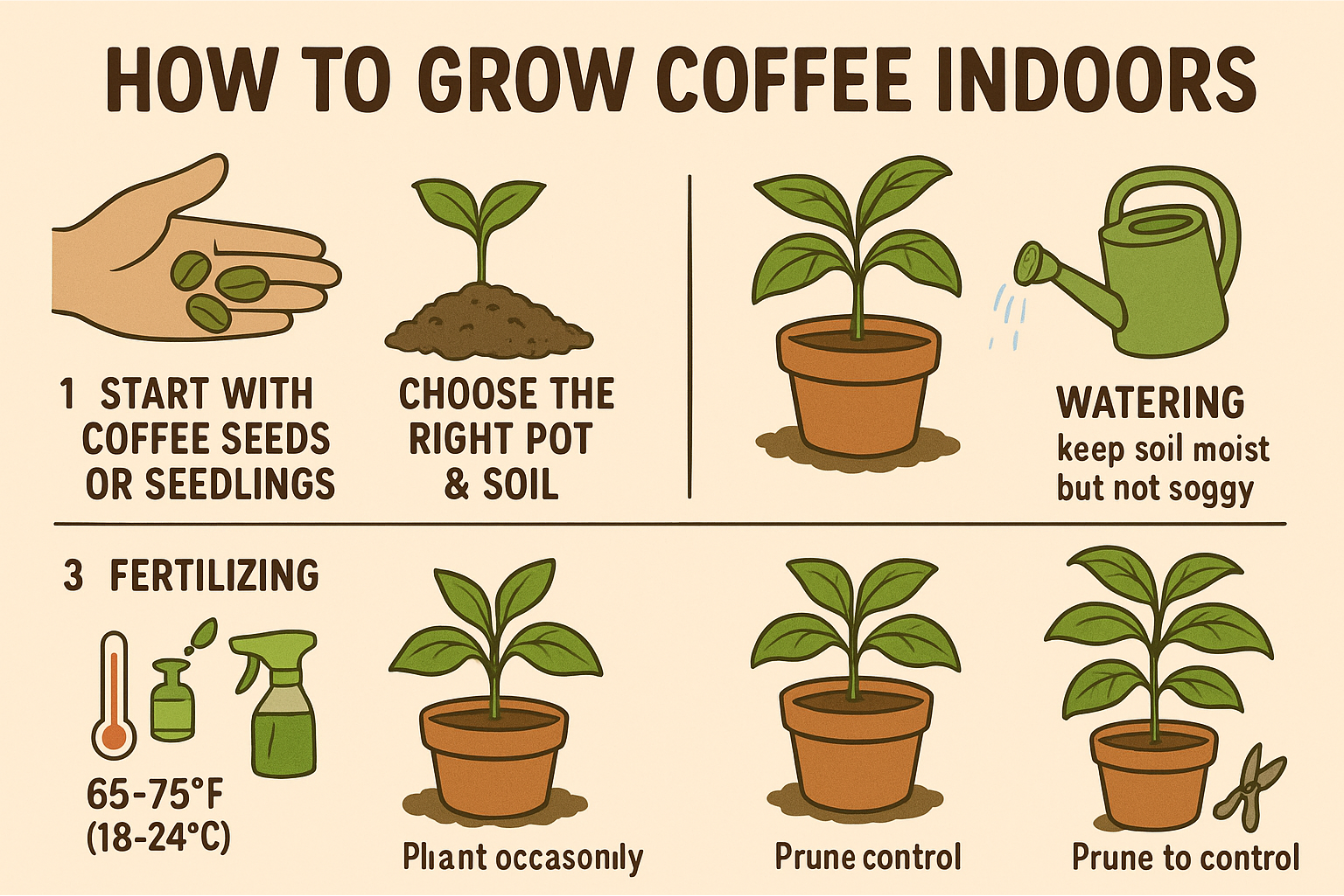
Growing coffee indoors is more than a trendy gardening experiment — it’s a long-term, rewarding project that brings tropical beauty, fragrant blooms, and serious plant-lover satisfaction into your home. While most people associate coffee with large outdoor farms in tropical regions, coffee plants can thrive indoors when their basic needs are met.
This in-depth, SEO-optimized guide covers everything you need to know about growing coffee indoors, from choosing the right variety and soil to humidity control, pruning, troubleshooting, and realistic expectations about harvesting beans.
Whether you’re a beginner or an experienced indoor gardener, this article will help you grow a healthy, thriving coffee plant at home.
Can Coffee Really Be Grown Indoors?
Yes — coffee can absolutely be grown indoors, and many people successfully grow it as a long-lived houseplant. Coffee plants are evergreen shrubs native to tropical climates, meaning they naturally prefer warm temperatures, filtered light, and steady moisture — conditions that can be recreated indoors.
However, it’s important to set realistic expectations:
- Indoor coffee plants grow slower than outdoor ones
- They produce fewer beans
- The main reward is the plant itself, not fast harvests
That said, with patience and consistent care, indoor coffee plants can flower and produce beans.
Best Coffee Varieties for Indoor Growing
Not all coffee plants are suitable for indoor environments.
Best choice: Coffea arabica
Coffea arabica is the top choice for indoor growing because:
- It tolerates lower light levels
- It grows more compact than other varieties
- It has smoother, less bitter beans
- It adapts well to containers
Other varieties (less ideal indoors)
| Variety | Indoor Suitability | Notes |
|---|---|---|
| Coffea arabica | Excellent | Best overall choice |
| Coffea canephora (Robusta) | Poor | Needs intense heat and light |
| Coffea liberica | Poor | Grows too large |
If you’re growing coffee indoors, Arabica is the clear winner.
Seeds vs Seedlings: Which Is Better?
You can start coffee plants indoors either from seeds or seedlings, but the experience is very different.
Growing from seeds
Pros:
- More affordable
- Satisfying to grow from scratch
Cons:
- Requires fresh, unroasted beans
- Germination can take 2–3 months
- Slower path to flowering
Growing from seedlings
Pros:
- Faster growth
- Higher success rate
- Ideal for beginners
Cons:
- Slightly more expensive
Best recommendation: Start with a seedling if you want faster, easier results.
Pots, Soil, and Drainage Explained
Coffee plants have sensitive roots and dislike standing water.
Best pot choice
- Always use pots with drainage holes
- Terracotta pots help prevent overwatering
- Start with a small pot and size up gradually
Ideal soil mix
Coffee plants prefer slightly acidic, well-draining soil.
Recommended mix:
- Peat-based potting soil
- Compost or worm castings
- Perlite or sand for drainage
Soil pH
- Ideal range: 5.5–6.5
Avoid heavy garden soil, which compacts easily and causes root rot.
Light Requirements: Natural vs Grow Lights
Light is one of the most misunderstood aspects of growing coffee indoors.
Natural light
Coffee plants thrive in bright, indirect light.
Best placements:
- Near east-facing windows
- A few feet back from south-facing windows
- Rooms with filtered daylight
Avoid harsh afternoon sun, which can scorch leaves.
Grow lights (comparison)
| Light Type | Effectiveness | Best For |
|---|---|---|
| Natural indirect light | Excellent | Most homes |
| LED grow lights | Very good | Low-light homes |
| Fluorescent lights | Moderate | Supplemental lighting |
Grow lights should run 10–12 hours daily.
Watering Coffee Plants the Right Way
Overwatering is the most common mistake.
Watering guidelines
- Keep soil consistently moist
- Water when top 1 inch feels dry
- Use room-temperature water
Seasonal adjustments
- Spring/Summer: Water more frequently
- Fall/Winter: Reduce watering
Signs of watering issues
| Symptom | Likely Cause |
|---|---|
| Yellow leaves | Overwatering |
| Crispy leaf edges | Underwatering |
| Drooping plant | Poor drainage |
Temperature and Humidity Needs
Coffee plants are tropical and sensitive to cold.
Ideal indoor conditions
- Temperature: 65–75°F (18–24°C)
- Avoid temperatures below 55°F (13°C)
Humidity requirements
Coffee plants prefer moderate to high humidity.
Ways to increase humidity:
- Regular misting
- Pebble trays with water
- Grouping plants together
- Using a humidifier
Low humidity often causes brown leaf tips.
Fertilizing Schedule and Nutrients
Coffee plants are moderate feeders.
Fertilizer type
- Balanced liquid fertilizer (10-10-10)
- Acid-loving plant fertilizer works well
Feeding schedule
- Every 2–3 weeks during growing season
- Reduce or stop in winter
Avoid over-fertilizing, which causes leaf burn and weak growth.
Pruning, Training, and Plant Shape
Pruning helps maintain size and encourages bushy growth.
Pruning tips
- Remove leggy or weak branches
- Trim after active growth periods
- Avoid heavy pruning all at once
Rotate the plant regularly for even light exposure.
Pollination and Flowering Indoors
Coffee plants produce fragrant white flowers that resemble jasmine.
Good news: Coffee plants are self-pollinating.
Indoor pollination tips:
- Gently shake the plant during flowering
- Improve airflow with a fan
Flowers typically last only a few days but are highly fragrant.
How Long Until You Get Coffee Beans?
Growing coffee indoors requires patience.
Timeline
- 1–2 years: Leafy growth
- 2–4 years: Flowering begins
- Several months after flowering: Beans form
Indoor plants produce fewer cherries, but the experience is unique.
Common Problems and How to Fix Them
| Problem | Cause | Solution |
|---|---|---|
| Brown tips | Low humidity | Increase moisture |
| Yellow leaves | Overwatering | Improve drainage |
| No flowers | Low light | Increase brightness |
| Leaf drop | Cold drafts | Stabilize temperature |
Most problems are easy to correct once identified.
Indoor vs Outdoor Coffee Growing
| Factor | Indoor | Outdoor |
|---|---|---|
| Growth speed | Slow | Fast |
| Bean yield | Low | High |
| Climate control | Full | Limited |
| Space needed | Small | Large |
| Maintenance | Moderate | High |
Indoor growing is best for plant lovers, not commercial production.
Is Growing Coffee Indoors Worth It?
If you love indoor plants and long-term projects, absolutely.
Benefits include:
- Tropical aesthetic
- Fragrant flowers
- Educational gardening experience
- Unique conversation plant
The beans are a bonus — not the main goal.
Final Thoughts
Growing coffee indoors is a journey, not a shortcut to homemade lattes. With the right care, environment, and patience, your coffee plant can thrive for years, becoming a stunning and rewarding part of your indoor garden.
If you enjoy nurturing plants and experimenting with unique houseplants, coffee is one of the most satisfying choices you can make.
0 Comment