
 admin
admin Growing Below the Surface: The Power of Underground Greenhouses
Table of Contents
ToggleGrowing Below the Surface: The Power of Underground Greenhouses
Imagine harvesting fresh greens in winter, growing herbs during storms, and keeping your plants protected from extreme heat… without relying on expensive heating systems. 🌱
That’s exactly what an underground greenhouse (often called a Walipini) is designed to do.
This smart, low-energy growing system uses the earth’s natural insulation to create a stable environment for plants year-round. In this full SEO guide, you’ll learn what a Walipini is, why it works so well, how to build one step-by-step, what to grow inside, and the biggest mistakes to avoid.
What Is an Underground Greenhouse (Walipini)?
A Walipini is a partially underground greenhouse built by digging into the ground and covering the space with a transparent sloped roof made of glass or polycarbonate.
The name Walipini comes from a traditional Andean term meaning “place of warmth.”
And that description fits perfectly because the earth itself becomes the greenhouse’s natural heater and protector.
Instead of fighting the weather, the Walipini works with nature:
-
the roof captures sunlight ☀️
-
the soil and earth walls store heat 🌍
-
the underground structure blocks wind and cold 🛡️
-
the temperature stays more stable day and night ✅
Why Underground Greenhouses Are So Powerful
Underground greenhouses are becoming popular again because they solve multiple gardening problems at once: cold weather, heat waves, wind damage, unstable temperatures, and expensive energy costs.
Here are the top benefits.
1) A More Stable Growing Temperature All Year
One of the biggest problems with regular greenhouses is temperature fluctuation.
A traditional greenhouse can:
-
overheat during sunny days
-
freeze at night in winter
-
stress plants constantly
But in a Walipini, the earth acts as thermal mass, meaning it absorbs heat and releases it slowly. This helps keep the inside climate far more consistent.
Plants love stability. It supports:
-
stronger growth
-
better yields
-
fewer diseases
-
less bolting (especially for leafy greens)
2) Protection From Extreme Weather
Because the structure is below ground level, it is naturally protected from:
-
strong winds
-
storms and heavy rain
-
snow buildup
-
extreme summer heat
-
sudden cold snaps
This makes a Walipini ideal for regions with unpredictable weather or harsh seasons.
3) Energy-Efficient and Low-Cost Heating
Most of the insulation comes from the soil itself.
That means an underground greenhouse can often grow food through cold months without electric heaters.
It’s one of the most energy-efficient greenhouse designs available, especially for people who want:
-
sustainable growing
-
low-cost gardening
-
off-grid systems
-
self-sufficiency
4) Longer Growing Seasons (Even Without Technology)
A Walipini can dramatically extend your growing season.
You can often start growing earlier in spring and continue later into fall.
In mild climates, you may be able to harvest year-round depending on what you grow.
How an Underground Greenhouse Works (Key Features Explained)
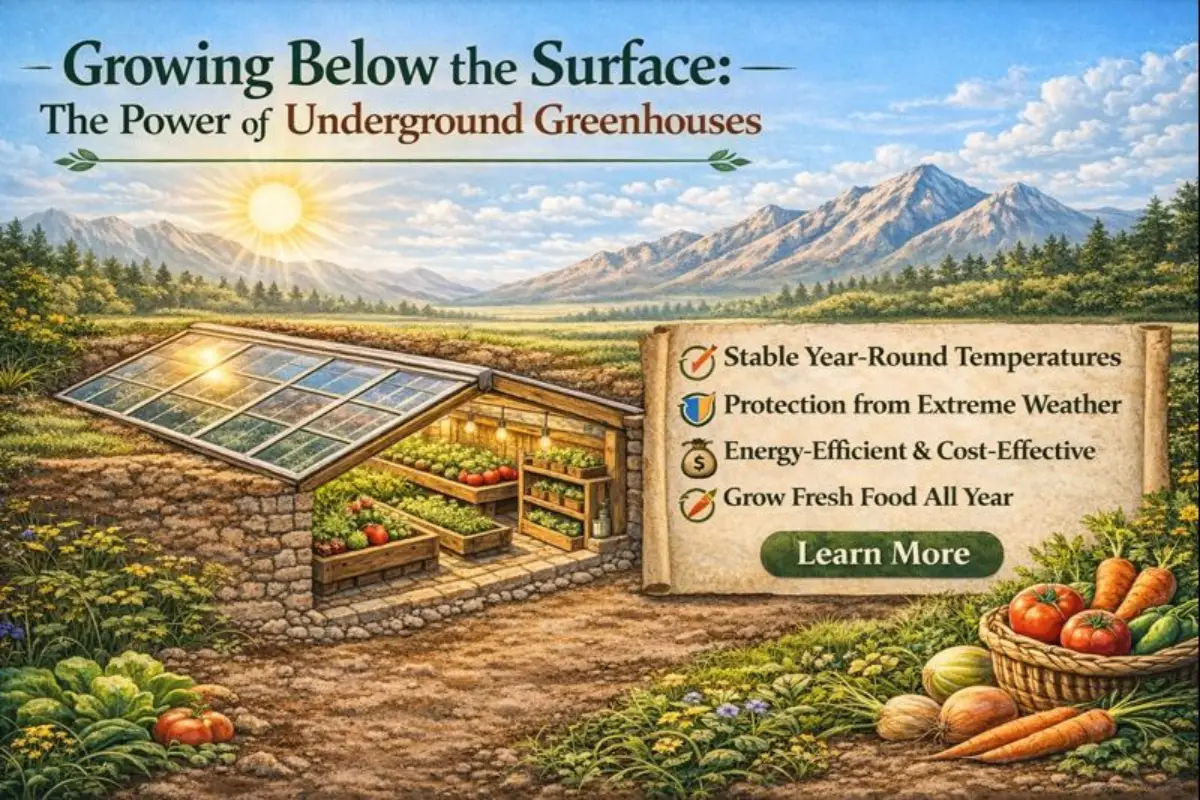
The design shown in the image highlights the most important elements that make this system successful.
Transparent Sloped Roof (Glass or Polycarbonate)
The roof is the sunlight collector.
It allows direct light to reach your plants while also trapping warmth inside.
The roof is typically sloped for two reasons:
-
better sun exposure in winter when the sun is low
-
rain and snow runoff instead of pooling on top
Polycarbonate is a popular choice because it’s strong, lightweight, and insulating.
Insulating Earth Walls (Thermal Mass)
The soil walls act like a natural blanket.
They reduce heat loss and keep the greenhouse more stable in temperature.
Many people reinforce the walls using:
-
stone blocks
-
brick
-
concrete
-
wood supports (depending on budget and soil)
Gravel Drainage Layer (Prevents Water Buildup)
Drainage is one of the most critical parts of a Walipini.
Because the greenhouse is below ground level, poor drainage can lead to:
-
standing water
-
excessive humidity
-
mold and fungal disease
-
root rot
A gravel layer at the bottom, sometimes combined with drainage pipes, prevents moisture problems.
Shelving for Seedlings and Herbs
Walipinis are perfect for plant organization.
Many gardeners add:
-
shelves for seedlings
-
side beds for herbs
-
raised beds for leafy greens
-
center walking paths for easy access
A clean layout makes maintenance easier and improves productivity.
Stable Year-Round Growing Environment
This is the biggest advantage of all.
Underground greenhouses are built to create a controlled microclimate that remains productive even when the outdoor climate is not.
Best Location for an Underground Greenhouse
Choosing the right location makes or breaks this project.
A great spot should have:
-
good sunlight exposure
-
stable soil that won’t collapse
-
no risk of flooding
-
easy access all year
Best Orientation
In the Northern Hemisphere (USA, Europe, North Africa), the ideal roof orientation is:
south-facing
This captures the strongest sunlight during the coldest months.
Avoid High Groundwater Areas
Before digging, always check if your property has:
-
high groundwater levels
-
heavy clay soil that holds water
-
frequent seasonal flooding
If the soil stays wet, your greenhouse can become damp and unhealthy fast.
How to Build an Underground Greenhouse (Step-by-Step)
Here is a clear and beginner-friendly building process.
1) Plan the Size and Depth
Most Walipinis are between 5 to 8 feet deep (1.5 to 2.5 meters).
Deeper structures usually provide better insulation, but they require stronger walls and drainage.
Keep the interior practical:
-
leave a center walkway
-
design beds for easy reach
-
plan space for storage or shelves
2) Dig and Shape the Structure
Once you dig the main pit, shape the interior walls and floor.
Many designs include:
-
a slight slope for drainage
-
step-down access or stairs
-
a strong frame around the top to support the roof
3) Install Drainage (This Is Non-Negotiable)
Drainage prevents water disasters.
A strong drainage system includes:
-
gravel base layer
-
optional perforated drain pipe
-
exit pathway for water to flow out
Without this, plants may suffer even if sunlight is perfect.
4) Reinforce the Earth Walls
Depending on your soil, you may need reinforcement.
Popular wall reinforcement options:
-
stone and mortar
-
concrete blocks
-
treated lumber frames
-
earthbags (strong and eco-friendly)
Your walls should be strong enough to resist:
-
soil pressure
-
erosion
-
moisture over time
5) Build the Roof Frame and Install the Panels
Your roof should be:
-
angled
-
sturdy
-
weatherproof
-
sealed properly
Polycarbonate panels are often preferred because they provide insulation while resisting damage better than glass.
6) Build Raised Beds and Interior Layout
Inside, create:
-
raised beds along both sides
-
one central walkway
-
shelving for seed starting
-
optional compost corner or tool storage
Add quality soil:
-
compost-rich
-
well-draining
-
loose and breathable
What Can You Grow in a Walipini?
An underground greenhouse works best when you grow plants that love stable conditions.
Best Crops for Underground Greenhouses
Leafy greens:
-
lettuce
-
spinach
-
kale
-
arugula
-
chard
Herbs:
-
basil
-
parsley
-
mint
-
cilantro
-
thyme
Cool-season vegetables:
-
radishes
-
green onions
-
peas
-
carrots (if soil is deep and loose)
Warm-season crops (in the right season):
-
tomatoes
-
peppers
-
cucumbers
-
eggplants
Tip: leafy greens are the best winter performers because they tolerate cooler temperatures and grow fast with good light.
Common Mistakes to Avoid
Even though Walipinis are powerful, mistakes can reduce results quickly.
Poor Drainage Design
This is the #1 failure point.
Signs your greenhouse has drainage issues:
-
constant wet soil
-
mold on surfaces
-
unpleasant smell
-
plants turning yellow or weak
Fix: improve airflow, add gravel, add drain pipes, and keep water flowing out.
Roof Angle Too Flat
A flat roof often causes:
-
low winter sunlight
-
water pooling
-
snow buildup
-
weaker growth
A proper slope makes a huge difference.
No Ventilation
Even underground greenhouses need fresh air.
Without ventilation:
-
humidity rises
-
fungal disease spreads
-
seedlings become weak
Add vents, roof openings, or simple airflow windows.
Overwatering
Because underground greenhouses lose less water to evaporation, overwatering happens easily.
Always check soil moisture first.
Water less often but more deeply when needed.
How to Maintain a Healthy Underground Greenhouse
Here are the habits that keep your Walipini productive long-term.
Ventilate Daily
Even 10 to 15 minutes of airflow can prevent many problems.
This reduces:
-
condensation
-
mold growth
-
fungal disease
Use Mulch to Balance Moisture
Mulch helps:
-
protect roots
-
stabilize temperature
-
reduce moisture extremes
Best options:
-
straw
-
dried leaves
-
compost mulch
Rotate Crops to Prevent Soil Exhaustion
Crop rotation improves:
-
soil fertility
-
pest resistance
-
long-term harvest quality
Even small greenhouses benefit from changing plant placement.
Add Compost Regularly
Because Walipinis can produce year-round, soil gets used more intensely.
Adding compost every few weeks helps keep your system productive and healthy.
Underground Greenhouse Checklist ✅
Before building or improving a Walipini, make sure you have:
-
sunny location with low flood risk
-
south-facing roof orientation (Northern Hemisphere)
-
deep gravel base and drainage system
-
strong reinforced earth walls
-
sloped transparent roof panels
-
ventilation plan
-
raised beds and walking path design
-
compost-rich and well-draining soil
FAQ: Underground Greenhouses (Walipini)
Can an underground greenhouse really work in winter?
Yes. The earth provides natural insulation, and the temperature stays more stable than outdoors. In cold regions, it may still need extra protection at night, but it performs far better than exposed systems.
How deep should a Walipini greenhouse be?
Most successful designs range from 5 to 8 feet deep. Deeper means better insulation, but you must improve wall strength and drainage.
Is polycarbonate better than glass?
Polycarbonate is often the best option because it’s lightweight, durable, and provides insulation. Glass offers excellent clarity but is heavier and more fragile.
Do underground greenhouses get too humid?
They can if ventilation and drainage are weak. A good design includes airflow openings and a gravel drainage base.
What crops grow best inside?
Leafy greens, herbs, and cool-season vegetables thrive, especially in winter. Warm-season crops can grow well in spring and summer.
Final Thoughts
Underground greenhouses are one of the smartest ways to grow food in a sustainable, low-energy, high-protection system. 🌱
By using the earth’s natural insulation, a Walipini creates a stable environment where plants can thrive through wind, cold, storms, and even intense heat. With the right location, strong drainage, and good ventilation, you can build a long-lasting greenhouse that supports year-round gardening and a more self-sufficient lifestyle.
0 Comment